
Desserts
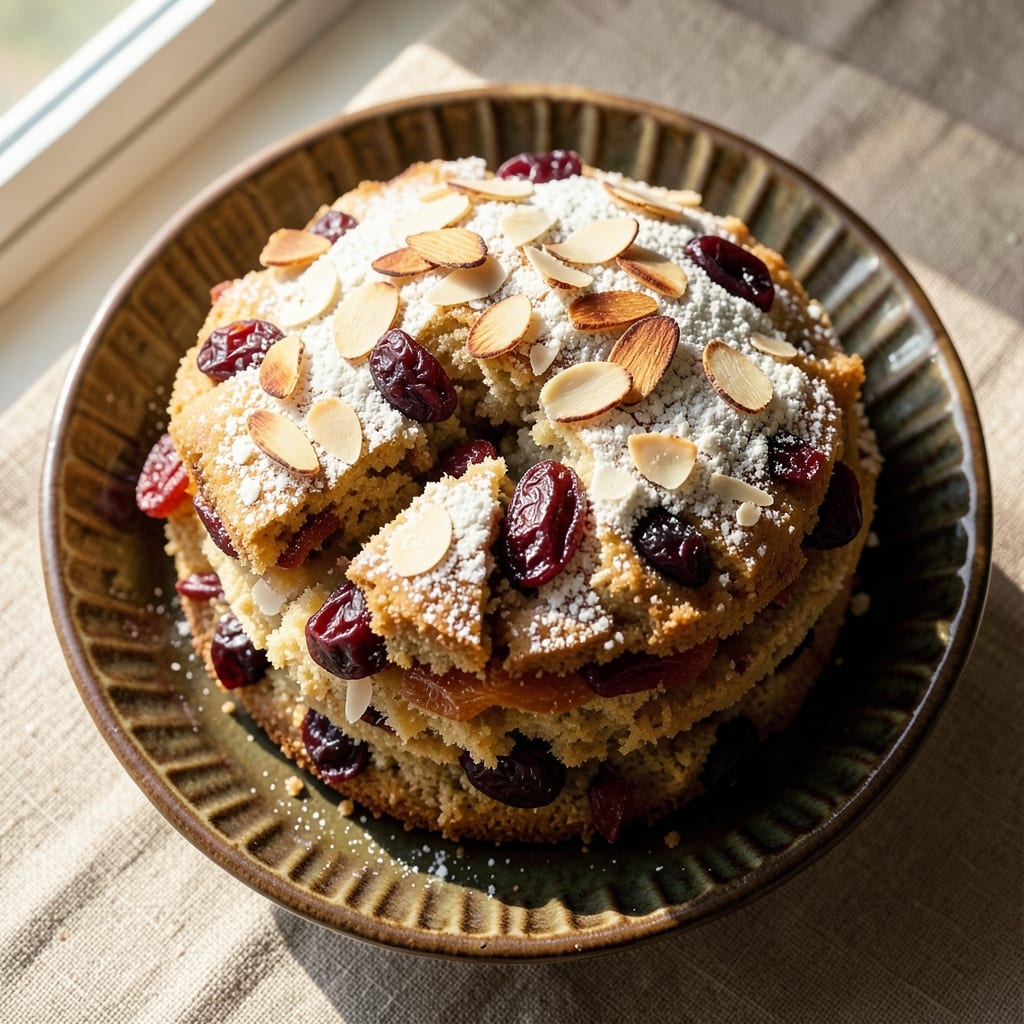
This almond fruit cake delivers the perfect balance of nutty crunch, spiced warmth, and moist texture—ideal for holidays or special occasions. The secret lies in almond flour for richness and dried fruit soaked in citrus syrup, ensuring every slice is fragrant and flavorful. I developed this recipe after years of perfecting the moisture-to-crumb ratio, so it never dries out or crumbles. What sets this cake apart is the dual texture: tender crumb studded with chewy dried fruit and toasted almonds that add depth. The spice blend—cinnamon, nutmeg, and cardamom—creates warmth without overpowering the natural sweetness. It’s a classic with modern flexibility, allowing for boozy infusions like rum or brandy if desired. By the time it emerges from the oven, you’ll have a cake with golden edges and a crackly top, signaling perfect doneness. The aroma alone will have guests anticipating the first slice—moist, fragrant, and packed with almond flavor in every bite. Serve plain or with a glaze for extra shine. This recipe scales beautifully for gifts or gatherings, and leftovers keep well for days. Let’s bake the perfect almond fruit cake.
Ingredients for almond fruit cake
These ingredients create a cake with almond crunch, citrus brightness, and spiced warmth—perfect for holidays.
| Ingredient | Amount | Notes |
|---|---|---|
| Almond Flour 🥜 | 2 ½ cups | Finely ground, unsweetened |
| All-Purpose Flour 🌾 | 1 cup | For structure and lift |
| Granulated Sugar 🍚 | 1 ½ cups | Light brown preferred |
| Light Brown Sugar 🍚 | ½ cup | Packed tightly |
| Large Eggs 🥚 | 3 whole | Room temperature |
| Unsalted Butter 🧈 | 1 cup | Cold, cubed |
| Dried Apricots 🍑 | 1 ½ cups | Chopped, stemmed |
| Dried Cherries 🍒 | 1 cup | Pitted, chopped |
| Orange Zest 🍊 | 1 tbsp | From 1 large orange |
| Orange Juice 💧 | ½ cup | Freshly squeezed |
| Vanilla Extract 🌸 | 2 tsp | Pure, high-quality |
| Ground Cinnamon 🌿 | 2 tsp | Freshly ground |
| Ground Nutmeg 🌿 | 1 tsp | Freshly grated |
| Ground Cardamom 🌿 | ½ tsp | Freshly ground |
| Salt 🧂 | ½ tsp | Fine sea salt |
| Sliced Almonds 🥜 | 1 cup | Toasted, for topping |
The almond flour is non-negotiable—Bob’s Red Mill or Anthony’s Goods are my go-tos for that fine, nutty texture. If you can’t find almond flour, blend whole almonds into a fine powder—just pulse them in short bursts to avoid turning into almond butter. The dried fruit soaks up the citrus syrup beautifully, but chop them into small pieces so they distribute evenly. For the orange zest, use a microplane and scrape only the bright yellow part—no white pith. The butter should be cold when creamed with the sugars for that perfect fluffy texture.
No almond flour? Substitute with extra all-purpose flour, but the cake will be less moist. Swap dried apricots for raisins or cranberries, but soak them in the citrus syrup first. Running short on cardamom? Allspice or extra cinnamon works in a pinch. The vanilla extract is where you can splurge—Madagascar bourbon vanilla adds depth, but pure vanilla works too. For extra moisture, add 1 tbsp of rum or brandy to the citrus syrup. And if you’re feeling fancy, toast the sliced almonds with a pinch of cinnamon before sprinkling on top.
This cake keeps beautifully—5 days at room temperature wrapped in foil, or 2 weeks in the fridge. For longer storage, freeze it 3 months in an airtight container. The citrus syrup soaks into the fruit overnight, so prep that first. Once baked, let it cool completely before slicing—patience pays off with cleaner cuts. The aroma alone will have your kitchen smelling like a holiday bakery, and the texture? Moist crumb with chewy fruit and crunchy almonds in every bite.
Why You'll Love This Recipe
- No Mixer Needed: Honestly, this cake comes together with just a bowl and a whisk—no stand mixer, no food processor, just you and a few minutes of stirring. The almond flour gives it that perfect crumb without requiring any fancy equipment, and the eggs bind everything so smoothly.
- Rich Without Overpowering: That combo of almond flour and brown sugar? It’s like a warm hug in cake form—nutty depth with just enough sweetness to keep it balanced. The eggs add a subtle richness, so it’s never cloying, just ridiculously satisfying.
- Holiday or Snack Time: Between us, this cake is my go-to for Christmas gifts, but it’s also the perfect afternoon pick-me-up when you need something light yet indulgent. The almond flour keeps it moist for days, so it’s great for prepping ahead—whether you’re feeding a crowd or just treating yourself.
- Budget-Friendly Luxury: Almond flour can feel pricey, but here’s the thing: this recipe uses just enough to make it special without breaking the bank. The rest is basic pantry stuff—sugar, eggs, flour—and the result? A cake that tastes like you spent hours baking, not minutes.
Step-by-step instructions for almond fruit cake
This cake delivers perfect moisture and nutty crunch—no dry crumb in sight!
Prepare the Dried Fruit
In a large bowl, combine the 1.5 cups dried apricots and 1 cup dried cherries. Pour the 0.5 cup freshly squeezed orange juice over them and let them soak for 15 minutes. This step rehydrates the fruit slightly, keeping your cake wonderfully moist throughout.
While the fruit soaks, toast the 1 cup sliced almonds in a dry skillet over medium heat for 3-4 minutes until fragrant and lightly golden. Watch closely—they'll burn quickly! Transfer them to a plate to cool completely. These toasted almonds add the perfect crunchy contrast to the tender cake.
Cream Butter and Sugars
In a stand mixer fitted with the paddle attachment, beat the 1 cup cold unsalted butter with the 1.5 cups granulated sugar and 0.5 cup packed light brown sugar on medium speed for 3-4 minutes. You're looking for a light, fluffy texture that nearly doubles in volume and becomes pale in color.
This creaming process incorporates air into the batter, which creates that perfect tender crumb. If your butter is too soft, chill the bowl for 10 minutes before continuing. The reason we wait until the butter is cold is that soft butter melts too quickly, preventing proper air incorporation.
Add Eggs and Flavorings
Add the 3 whole large eggs, one at a time, mixing on low speed for 30 seconds after each addition until fully incorporated. Scrape down the sides of the bowl to ensure everything is well combined. Add the 1 tbsp orange zest, 2 tsp vanilla extract, and mix for another 30 seconds until smooth.
Here's where the magic happens: the orange zest adds a bright citrus note that cuts through the richness of the butter and nuts, while the vanilla extract deepens the overall flavor profile. The mixture should be thick and pale yellow at this stage—almost like a rich custard.
Combine Dry Ingredients
In a separate bowl, whisk together the 2.5 cups almond flour, 1 cup all-purpose flour, 2 tsp ground cinnamon, 1 tsp ground nutmeg, 0.5 tsp ground cardamom, and 0.5 tsp salt. Sift the mixture through a fine-mesh sieve directly into the wet ingredients to prevent lumps.
With the mixer on low speed, gradually add the dry ingredients to the wet mixture, mixing just until combined. Avoid overmixing—you should still see a few streaks of flour. This step ensures a tender crumb without developing too much gluten, which would make the cake tough.
Fold in Fruit and Bake
Using a rubber spatula, gently fold in the soaked dried fruit and any remaining orange juice from the soaking bowl. The mixture will be thick and slightly sticky—this is normal. Pour the batter into a 9x13-inch baking pan lined with parchment paper, spreading it evenly.
Sprinkle the toasted sliced almonds evenly over the top, pressing them lightly into the batter so they stay in place during baking. Bake in a preheated 350°F oven for 40-45 minutes, or until a toothpick inserted in the center comes out clean. The cake should be golden brown and spring back slightly when pressed.
Cool and Serve
Allow the cake to cool in the pan for 15 minutes, then transfer it to a wire rack to cool completely. This gradual cooling prevents cracking and helps the cake set properly. Once fully cooled, you can slice and serve—each piece will be moist with just the right amount of nutty crunch from the almonds.
For the best experience, serve at room temperature. The flavors develop and meld beautifully as the cake sits, making it even more delicious the next day. Store any leftovers in an airtight container at room temperature for up to 5 days or refrigerate for up to 1 week.
Pro Tips For Making Almond Fruit Cake
- Whisk Eggs Cold: Pull those eggs straight from the fridge—room temperature eggs incorporate air differently, and this cake needs that lightness. I used to warm them up "for better mixing," but the texture suffered. Cold eggs beat stiff peaks into the dry ingredients like a dream.
- Sift Almond Flour Twice: Almond flour clumps like a grudge—sift it once before measuring, then sift the measured portion again right into your bowl. This avoids dense pockets and keeps the cake tender. (Yes, it’s extra work, but trust me, your first slice will be worth it.)
- Don’t Overmix the Batter: Fold in the dry ingredients until just combined—lumpy is better than tough. I learned this after a cake turned out like a hockey puck. Stop when the flour streaks disappear, not when it looks "perfect."
- Bake Low and Slow: 325°F (not 350°F) for the full time—this cake needs patience to develop its depth. I rushed it once and ended up with a dry, cracked mess. The center should spring back when pressed, not bounce like a trampoline.
Regional styles of almond fruit cake
British Tradition
The British version of almond fruit cake is legendary, often featuring sultanas, candied peel, and a generous splash of brandy in the citrus syrup. I remember my grandmother's recipe called for soaking the fruit in brandy overnight, which infuses the cake with deep, boozy warmth. The British also prefer a thicker batter, baked in a round cake tin rather than a sheet pan, creating a taller, more dramatic cake perfect for celebrations like Christmas. 🎄
American Twist
In the US, we often swap British candied peel for dried apricots and cherries, and the citrus syrup gets a rum infusion instead of brandy. The texture leans slightly lighter, with more almond flour for that signature nutty crunch. I've seen Southern variations where pecans replace almonds, and the cake is topped with a honey glaze—a sweet contrast to the British preference for dusting with powdered sugar. 🍯
Scandinavian Spice
Nordic bakers take the cake in a cooler, spicier direction, often adding fennel seeds and cloves to the spice blend alongside cinnamon and cardamom. The fruit mix might include lingonberries instead of cherries, and the cake is sometimes steamed for 10 minutes after baking to create an ultra-moist center. I tried this method once, and the result was a denser, almost pudding-like texture that was incredible with coffee. ☕
Australian Nuts
Down under, they keep the almonds but add macadamia nuts for extra richness, and the fruit often includes dried mango alongside apricots. The citrus twist? Lemon myrtle—a native Australian herb that adds a bright, eucalyptus-like aroma to the cake. I've seen recipes where the batter is folded with whipped cream for a lighter crumb, making it perfect for warm climates where dense cakes can feel heavy. 🌞
French Elegance
The French version is all about refinement: less fruit, more almonds, and a silky glaze made with orange blossom water and powdered sugar. The cake is often baked in a fluted pan and garnished with edible flowers before serving. I once made a French-inspired version where I folded in toasted almond paste instead of just flour—it was like eating a nutty, floral cloud. 🌸
Modern Fusion
Today's creative bakers are blending styles—think Japanese matcha-infused citrus syrup or Mexican chocolate chunks in the batter. I experimented with a chili-lime zest variation that added a surprising kick, while others use espresso powder in the dry ingredients for a mocha twist. The key is balancing tradition with innovation—whether that means keeping the classic spice blend or swapping in unexpected flavors like rosewater or lavender. 🌿
Nutrition facts
Frequently asked questions
Why does your almond fruit cake use both almond flour and all-purpose flour?
The almond flour delivers that signature nutty flavor and moist texture, while the all-purpose flour provides structure and lift. Using just almond flour would make the cake too dense—this combo gives you the best of both worlds: tender crumb with almond crunch. The ratio ensures it stays rich but not heavy.
Can I make this cake without almond flour?
Yes, but the texture will change. Replace the almond flour with 2.5 cups all-purpose flour plus 1 tbsp cornstarch for moisture, though the nutty flavor will be milder. For a closer substitute, blend whole almonds into a fine powder—just don’t over-process or you’ll get almond butter!
How do I know when the cake is fully baked?
Look for three signs: the top should be golden brown with a crackly texture, the edges should pull away slightly from the pan, and a toothpick inserted in the center should come out clean (or with just a few moist crumbs). Overbaking dries out the cake, so err on the side of pulling it out a minute early if unsure.
Should I add a glaze or frosting?
This cake is delicious plain, but a simple glaze elevates it! Try a powdered sugar glaze (1 cup powdered sugar + 1 tbsp orange juice) or a honey drizzle (equal parts honey and warm water). Brush it on after cooling—it adds shine and a touch of sweetness without overwhelming the fruit and nut flavors.
Can I make this cake ahead of time?
This cake actually tastes better the next day as the flavors meld. Bake it 1-2 days ahead and store wrapped at room temperature. For longer storage, refrigerate up to 1 week or freeze for 3 months. Bring to room temperature before serving for the best texture.