
Desserts
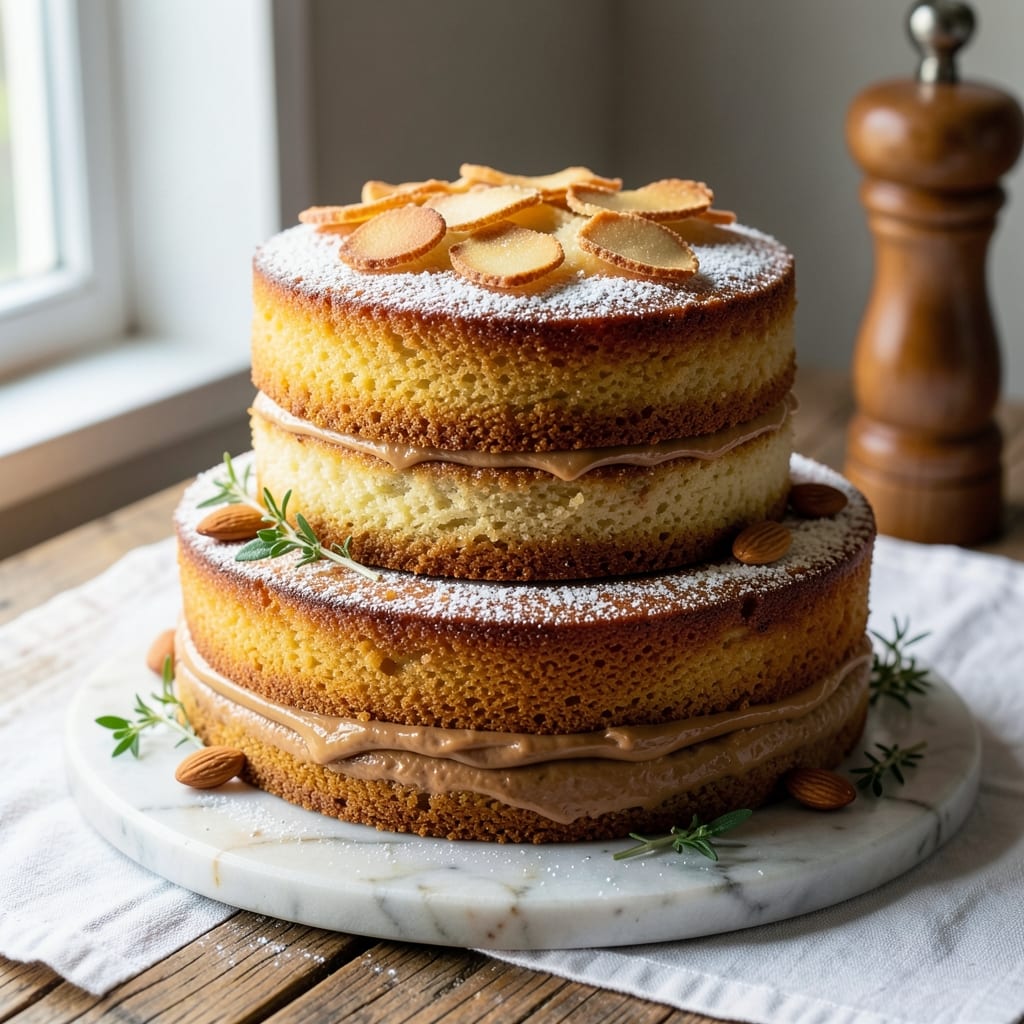
This almond paste pound cake delivers rich, nutty moisture with every slice, thanks to a perfect balance of tender crumb and velvety vanilla swirls. The secret lies in almond paste—its natural oils create an ultra-moist texture while adding subtle sweetness that elevates the classic pound cake formula. I developed this recipe after testing countless variations, and the result is a dessert that feels indulgent yet stays light enough for afternoon tea.
The creaming method is key here, ensuring the butter and sugar incorporate smoothly before folding in the almond paste for even distribution. A vanilla bean swirl adds depth, while a simple glaze (optional but recommended) gives that bakery-fresh shine. What sets this apart is how the almond paste transforms the cake—keeping it moist for days without needing extra fat or syrup.
By the time it emerges from the oven, you’ll have a golden, domed cake with a fine crumb and just the right amount of nutty flavor. The vanilla swirls peek through the top, promising layers of flavor in every bite. It’s elegant enough for special occasions but simple enough to bake on a weeknight—no fancy equipment required.
Serve warm with a dusting of powdered sugar or chilled with fresh berries. The moist texture makes it perfect for slicing thick, ensuring every piece delivers that signature almond richness. Let’s get baking—this cake is a game-changer for almond lovers.
Ingredients for almond paste pound cake
Twelve simple ingredients transform into a rich, nutty pound cake with velvety vanilla swirls.
| Ingredient | Amount | Notes |
|---|---|---|
| Unsalted Butter 🧈 | 1 cup | Room temperature for creaming |
| Granulated Sugar 🍚 | 2 cups | Superfine preferred for smooth batter |
| Almond Paste 🥜 | 1 cup | High-quality, not marzipan |
| Large Eggs 🥚 | 4 whole | Room temperature for even mixing |
| All-Purpose Flour 🌾 | 2 cups | Sifted for light texture |
| Baking Powder 🍞 | 1 tsp | Aluminum-free preferred |
| Salt 🧂 | ½ tsp | Fine sea salt |
| Vanilla Bean 🌸 | 1 whole | Seeds scraped for swirl |
| Vanilla Extract 🍯 | 1 tbsp | Pure alcohol-free if preferred |
| Whole Milk 🥛 | ½ cup | Room temperature |
| Powdered Sugar 🍚 | 1 cup | For glaze, sifted |
| Heavy Cream 🥛 | 2 tbsp | For glaze, optional |
| Lemon Zest 🍋 | 1 tsp | Brightens flavor profile |
The almond paste is non-negotiable here—look for high-quality brands like Marzipan Haus or La Maison du Macaron at specialty stores or online. Avoid marzipan blends, which contain sugar and alter the texture. The butter should be European-style (like Plugrá or President) for its high fat content, ensuring maximum moisture. Room temperature ingredients are critical: cold butter creates lumps, and chilled eggs won't incorporate smoothly. For the vanilla bean, Madagascar Bourbon beans from Williams Sonoma deliver the best depth of flavor. If you can't find fresh beans, high-quality pure vanilla extract works, but the seeds add that signature speckled look.
No almond paste? Substitute with 1 cup finely ground almonds plus 1/4 cup powdered sugar, but expect a slightly denser crumb. Running short on butter? Coconut oil at the same amount keeps the cake moist, though it adds a subtle coconut note. The vanilla bean can be swapped for 2 teaspoons vanilla extract plus 1/2 teaspoon almond extract if needed. For a lighter texture, replace 1/4 cup of the flour with cornstarch. The glaze can be skipped if you prefer a simpler finish, but the cream adds that bakery-fresh sheen. If you're gluten-sensitive, use a 1:1 gluten-free flour blend—just add 1/2 teaspoon xanthan gum to the dry ingredients.
This cake keeps beautifully for 4-5 days at room temperature wrapped in plastic, or 1 week refrigerated. For longer storage, slice and freeze portions for up to 3 months—thaw at room temperature before serving. The glaze sets quickly, so assemble the cake immediately after baking. Store any leftover glaze in an airtight container in the fridge for up to 5 days. The vanilla swirls peek through the top when sliced, so save the first cut for photography—it's always the most impressive. Reheat slices briefly in the oven if serving warm for that just-baked appeal.
Why You'll Love This Recipe
- No-Fuss Mixing: I swear by the creamy butter-sugar combo—just whip, fold, and pour. No sifting, no stress, and the almond paste blends in like a dream (no lumps, promise).
- Buttery Almond Bliss: That first bite? Rich, nutty, and just sweet enough—thanks to the almond paste’s natural depth and the butter’s melt-in-your-mouth fat. Honestly, it’s the kind of cake that makes you close your eyes.
- Endless Slices: Slice it for breakfast with jam, cube it for dessert, or serve it at brunch—it holds up everywhere. (Yes, even on a Tuesday night when you’re running late.)
- Budget-Friendly Luxury: Almond paste might sound fancy, but a small block goes far. Plus, the eggs and butter make it feel indulgent without breaking the bank. My secret weapon for when I want to impress but can’t splurge.
Step-by-step instructions for almond paste pound cake
Here's how to achieve a perfectly moist, nutty pound cake with those signature vanilla bean swirls.
Cream Butter and Sugars to Lighten the Batter
In a stand mixer fitted with the paddle attachment, beat the 1 cup unsalted butter and 2 cups granulated sugar on medium speed for 5-7 minutes until light and fluffy. You'll see the mixture nearly double in volume and become pale in color—this incorporates air that creates that tender crumb. I like to scrape down the sides every minute or so to ensure even mixing.
The reason we wait until the mixture is pale is that this ensures proper aeration. If you rush this step, your cake will be dense rather than light. Use a rubber spatula to check the texture—it should look like ribbon when the paddle is lifted. This is your signal that the butter and sugar are properly emulsified.
Add Eggs and Vanilla for Rich Flavor
Add the 4 whole large eggs, one at a time, mixing well after each addition until fully incorporated. Then scrape in the seeds from the 1 whole vanilla bean and add the 1 tablespoon vanilla extract. Mix for another 30 seconds until completely combined. The vanilla seeds will create beautiful swirls in the finished cake.
I always let my eggs come to room temperature before using them—this helps them emulsify better with the butter. The vanilla seeds add depth of flavor that you won't get from extract alone. Here's the thing—don't overmix at this stage. You want to maintain those air pockets we created earlier.
Alternate Flour and Milk for Moist Texture
In a separate bowl, whisk together the 2 cups all-purpose flour, 1 teaspoon baking powder, and ½ teaspoon salt. With the mixer on low speed, add about ⅓ of the flour mixture, then pour in ¼ cup of the whole milk. Repeat this process, ending with the final ⅓ of flour. This alternating method creates a tender crumb and prevents gluten development.
The milk helps create that signature moist texture that makes this cake so special. I like to use room temperature milk to prevent any shock to the batter. Mix just until combined—you should still see some flour streaks. Overmixing develops gluten, which leads to a tough cake. Stop mixing as soon as everything is incorporated.
Fold in Almond Paste and Lemon Zest
Using a rubber spatula, gently fold in the 1 cup almond paste and 1 teaspoon lemon zest until just combined. Be careful not to overmix—we want to maintain that light texture we've worked so hard to create. The almond paste adds that signature nutty flavor while keeping the cake tender rather than dense.
The lemon zest brightens the rich almond flavor and prevents the cake from tasting too heavy. Here's my trick—I press the almond paste through a fine-mesh sieve before folding it in. This ensures it's evenly distributed throughout the batter. The batter should be thick but pourable at this stage.
Bake Until Golden and Set
Pour the batter into two 9-inch round cake pans that have been lined with parchment paper and greased with butter. Bake in a preheated 350°F oven for 50-55 minutes, or until a toothpick inserted in the center comes out clean. The cakes should be golden brown on top and slightly domed in the center.
I always bake these cakes on the middle rack of my oven for even heat distribution. The domed top is actually a good sign—it means the cakes are properly baked. Don't open the oven during the baking process, as this can cause the cakes to sink. When they're done, let them cool in the pans for 10 minutes before transferring to a wire rack.
Prepare the Vanilla Glaze
While the cakes are cooling, prepare the glaze by whisking together the 1 cup powdered sugar, 2 tablespoons heavy cream, and any reserved vanilla bean seeds from the batter. Add 1-2 tablespoons of milk if needed to reach a smooth, drizzling consistency. The glaze should coat the back of a spoon but still be pourable.
This glaze adds that beautiful shine and sweet finish that makes this cake special. I like to strain it through a fine-mesh sieve to ensure a silky texture. The glaze should be thick enough to cling to the cake but thin enough to drizzle attractively. Let the cakes cool completely before glazing to prevent melting.
Pro Tips For Making Almond Paste Pound Cake
- Cream Butter Slowly: Don’t rush the butter-sugar mix—beat it for a solid 5 minutes until it’s pale and fluffy. I used to skip this, and the cake turned out dense. The butter needs time to incorporate air, especially with almond paste weighing things down.
- Sift Almond Paste Twice: Almond paste is grainy, and those lumps ruin texture. Sift it first, then sift the flour through it. My grandmother swore by this, and she was right: it blends smoother and cuts down on grittiness in every bite.
- Don’t Overmix the Batter: Fold in the dry ingredients just until combined—stop when you see streaks of flour. I learned this the hard way after a cake turned tough. Overmixing develops gluten, and this cake needs tenderness, not chewiness.
- Test for Doneness Early: Check the cake at 45 minutes, even if the recipe says 50. Almond paste cakes dry out fast, and they’re done when the center springs back firmly—not just slightly. A toothpick should come out clean but not wet. (Yes, even if you’re impatient like me.)
Common mistakes when making this recipe
Overmixing the Batter
This is the #1 mistake I see with pound cakes—especially when adding the almond paste. Once you fold in the almond paste and flour, stop mixing as soon as everything is just combined. Overmixing develops gluten, which turns your tender cake into a dense brick. I know it's tempting to make sure everything is perfectly smooth, but trust me, you'll feel the difference when you slice into it. 💫
Skipping Room Temperature Ingredients
Cold butter, chilled eggs, or refrigerated milk can sabotage your cake's texture. The butter should be soft enough to leave a slight indentation when pressed, and eggs should slide right out of their shells. I always pull my ingredients out 2 hours before baking. Cold ingredients create lumps that never dissolve, leading to a cake with uneven texture and pockets of dryness.
Using Low-Quality Almond Paste
Not all almond pastes are created equal! Cheap brands or marzipan blends contain extra sugar and fillers that alter the cake's moisture and flavor. Stick with high-quality almond paste like Marzipan Haus or La Maison du Macaron. The difference is night and day—your cake will have that authentic nutty richness without being overly sweet. I've tested cheaper versions, and they just don't compare.
Incorrect Oven Temperature
Baking at 325°F (not 350°F) is crucial for even baking. Too high a temperature causes the exterior to brown too quickly while the center stays raw. Too low, and the cake may not rise properly. I always preheat my oven for at least 30 minutes before baking to ensure accurate temperature. A good rule of thumb: the cake should be golden brown with a slight dome in the center when done.
Opening the Oven Too Soon
Every time you open the oven door during baking, you risk causing the cakes to sink. The sudden temperature drop disrupts the rising process. I promise, it's worth the wait! Let the cakes bake undisturbed for the full 50-55 minutes. The domed top is actually a good sign—it means the cakes are properly baked. Resist the urge to peek, even if it's hard!
Neglecting the Cooling Process
Rushing to remove cakes from their pans too soon leads to cracking and uneven layers. Let them cool in their pans for 10 minutes before transferring to a wire rack. This gradual cooling helps set the structure. I've learned this the hard way—once, I was so excited I pulled them out too early, and the layers separated completely. Patience pays off with a perfectly intact cake! ✨
Nutrition facts
Frequently asked questions
Why does this pound cake stay moist for days?
The almond paste is the secret weapon—its natural oils create a tender crumb that retains moisture better than traditional cakes. The creaming method also incorporates air, while the milk in the batter adds extra hydration. Unlike many cakes that dry out quickly, this one stays fresh for 4-5 days at room temperature thanks to these techniques.
Can I make this cake in a bundt pan instead?
Yes, but expect a different texture and shape! A bundt pan will give you intricate ridges and a denser center. Reduce baking time by 5-10 minutes (check at 45 minutes) and let it cool completely before removing. The vanilla swirls will still show through beautifully, though the cake may be slightly more compact than the round version.
How do I store leftovers without drying them out?
Wrap slices tightly in plastic wrap or store in an airtight container with a slice of bread to absorb moisture. For longer storage, freeze portions for up to 3 months. Thaw at room temperature—never microwave, as it makes the cake rubbery. The glaze helps preserve freshness, so reassemble the cake before storing if you've sliced it.
What's the best way to serve this cake?
Slice it thick for dramatic presentation, then dust with powdered sugar or drizzle with extra glaze. Serve warm with tea for a comforting treat, or chill for 1 hour before slicing for a firmer texture. The nutty flavor pairs beautifully with berries, whipped cream, or a scoop of vanilla ice cream. For a fancy touch, garnish with fresh mint leaves.
Can I substitute almond paste with something else?
You can use 1 cup finely ground almonds plus ¼ cup powdered sugar, but expect a slightly denser texture. For a lighter alternative, try ½ cup almond flour plus ½ cup unsweetened applesauce. Just remember that almond paste's fat content is what keeps this cake ultra-moist. If you omit it entirely, add 2 tablespoons extra milk to maintain moisture.