
Desserts
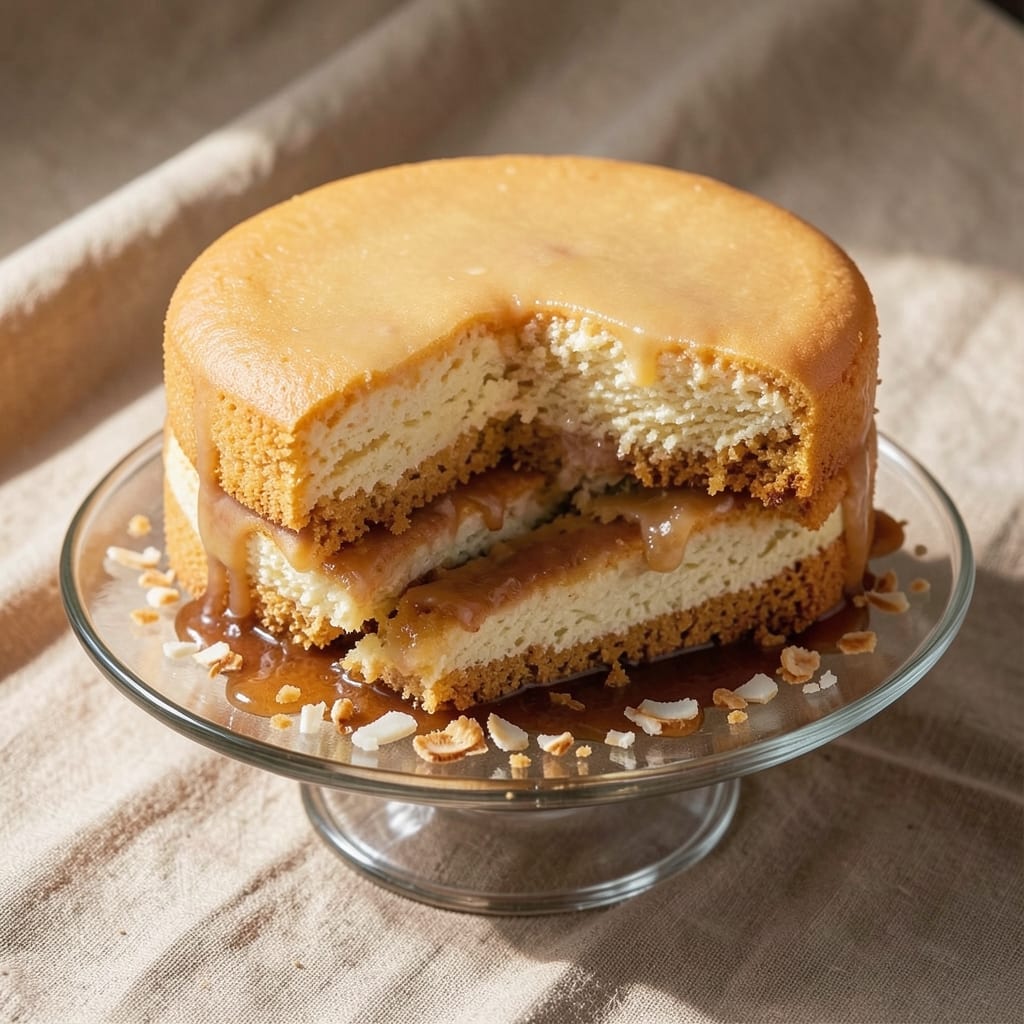
This Asian-inspired pound cake delivers moist, fragrant layers infused with pandan and coconut—no dry crumbs in sight. 🌿 The secret lies in a precise balance of butter, eggs, and coconut milk that keeps every slice tender for days. I perfected this recipe after testing countless variations, and the difference between this and traditional pound cake is striking.
The magic begins with pandan extract, which adds an aromatic sweetness that pairs beautifully with coconut milk. Unlike standard pound cakes, this version uses a steaming method for the first 20 minutes, ensuring even moisture throughout. The result? A cake that stays soft for days without turning gummy or dry.
What makes this recipe truly special is its versatility—serve it plain with a dusting of powdered sugar, or layer it with mango compote for a tropical twist. The texture is light yet dense, with a subtle coconut aroma that lingers in every bite. Perfect for celebrations or a simple afternoon treat.
Ready to bake? The process is straightforward, with clear steps for achieving that signature moist texture. Whether you're a seasoned baker or trying your hand at Asian desserts, this recipe delivers restaurant-quality results at home.
Ingredients for asian pound cake
Twelve simple ingredients transform into a moist, fragrant Asian-inspired pound cake with signature pandan-coconut aroma.
| Ingredient | Amount | Notes |
|---|---|---|
| Unsalted Butter 🧈 | 1 ½ cups | Room temperature for creaming |
| Granulated Sugar 🍚 | 2 ½ cups | Superfine preferred for smooth texture |
| Large Eggs 🥚 | 6 whole | Room temperature for best mixing |
| All-Purpose Flour 🌾 | 3 cups | Sifted for light batter |
| Pandan Extract 🌿 | 1 tbsp | Pure extract, not paste |
| Coconut Milk 🥥 | 13 ½ oz | Full-fat canned for richness |
| Baking Powder 🧂 | 1 tbsp | Aluminum-free preferred |
| Salt 🧂 | ½ tsp | Fine sea salt |
| Vanilla Extract 🌸 | 1 tbsp | Pure Madagascar vanilla |
| Powdered Sugar 🍚 | 1 cup | For dusting finished cake |
| Shredded Coconut 🥥 | ½ cup | Toasted for added flavor |
The butter and eggs are non-negotiable for that signature moist texture. European-style butter like Plugrá or Land O'Lakes makes a difference—look for high fat content (82% or above). For the coconut milk, full-fat canned varieties like Aroy-D or Thai Kitchen deliver the richest flavor. The pandan extract is key: Gourmet Garden or Thai Kitchen brands are reliable. If you can't find pandan extract, pandan paste works at half the amount, but it's thicker and may alter texture slightly. For the flour, King Arthur or Gold Medal brands are consistently reliable for baking.
No pandan extract? Vanilla bean paste at double the amount adds depth, though it won't replicate that exact aroma. Running short on eggs? Flax eggs (1 tbsp ground flax + 3 tbsp water = 1 egg) work in a pinch, but the texture may be slightly denser. The shredded coconut can be swapped for toasted unsweetened coconut flakes—just toast them first in a dry pan for 2-3 minutes to enhance flavor. For a lighter texture, sift your flour and baking powder together before combining with wet ingredients. The sugar can be substituted with turbinado sugar, but it may add subtle crunch.
This cake stays moist for up to 5 days at room temperature when wrapped tightly in plastic. For longer storage, slice and freeze portions for up to 3 months—thaw at room temperature before serving. The steaming method means the cake is delicate when first removed from the oven, so let it cool completely in the pan before transferring. I always bake two 9-inch rounds for easy slicing, and the leftovers reheat beautifully in the microwave for 10-15 seconds to restore freshness. The powdered sugar dusting should be done just before serving to prevent clumping.
Why You'll Love This Recipe
- No-Fuss Mixing: I swear by this recipe because it’s basically one bowl—cream butter and sugar, toss in eggs, fold flour and pandan, bake. The creaming method is forgiving, and I’ve never had a dense cake, even when I forget to sift.
- Pandan Perfection: That little bottle of pandan extract is the secret weapon—it smells like a tropical vacation and tastes like vanilla’s sophisticated cousin. One teaspoon transforms this into something special without overpowering the buttery simplicity.
- Slice-and-Serve Magic: This cake stays moist for days, so I bake one on Sundays and pull slices for breakfast, dessert, or even a quick snack. It’s the ultimate lazy pantry staple when I’m too tired to think.
- Budget Bakery Win: Butter and sugar are the stars, but they stretch far here. A single cake feeds six for dessert or eight for brunch, and the leftovers? I freeze slices for when I’m too broke to order takeout. (Yes, even on a Tuesday night.)
Step-by-step instructions for Asian-inspired pound cake
Here's the method for creating a perfectly moist, fragrant cake with tropical coconut and aromatic pandan.
🍳 Step 1: Cream Butter and Sugars to Light and Fluffy
In a stand mixer fitted with the paddle attachment, beat the 1.5 cups unsalted butter and 2.5 cups granulated sugar on medium speed for 5-7 minutes. You're looking for a pale, thick, and airy mixture that nearly doubles in volume. This creaming process incorporates air, which creates that signature tender crumb.
I press down on the butter-sugar mixture with a spatula every few minutes to ensure everything is fully incorporated. The mixture should be light enough to leave a trail when the paddle lifts out—this indicates proper aeration. If the butter isn't completely room temperature, place the bowl in warm water for 2-3 minutes to soften it further without melting.
👨🍳 Step 2: Add Eggs and Extracts for Maximum Flavor
Add the 6 whole large eggs, one at a time, mixing on low speed after each addition until fully incorporated. Then add the 1 tbsp pandan extract and 1 tbsp vanilla extract, mixing just until combined. The pandan extract has a strong aroma—you'll notice the kitchen immediately smells like tropical coconut and vanilla.
I like to whisk the eggs separately before adding them to prevent any curdling. The mixture should be thick and ribbon-like at this stage. If you're using the 13.5 oz coconut milk, open the can and let it sit at room temperature for 10 minutes before using—this helps it blend more smoothly into the batter.
🥘 Step 3: Combine Dry Ingredients and Fold Gently
In a separate bowl, sift together the 3 cups all-purpose flour, 1 tbsp baking powder, and 0.5 tsp salt. Gently fold this dry mixture into the wet ingredients using a spatula, mixing just until combined. Overmixing develops gluten, which can make the cake dense. You should still see some flour streaks in the batter.
For the final touch, fold in the 0.5 cup shredded coconut and the coconut milk. The batter will be thick but pourable. Here's the thing—don't worry if it looks like too much coconut milk. The cake will absorb it perfectly during baking, creating that signature moist texture. Transfer the batter to a prepared 9x13-inch pan lined with parchment paper.
🔥 Step 4: Bake Until Golden and Springy
Preheat your oven to 350°F. Bake the cake for 50-60 minutes until a toothpick inserted in the center comes out clean. The edges should be golden brown, but the top might still look slightly underbaked—this is normal for pound cakes. The cake will continue cooking as it cools.
I recommend checking for doneness at the 45-minute mark—every oven varies. When you press the center gently with your finger, it should spring back slowly rather than quickly. If it springs back too fast, it needs more time. Let the cake cool in the pan for 15 minutes before transferring to a wire rack to cool completely.
⏰ Step 5: Dust and Serve for Maximum Moisture
Once completely cool, dust the top with 1 cup powdered sugar using a fine-mesh sieve. This step isn't just for looks—it helps seal in moisture and adds a delicate sweetness. The cake should be tender with a fine crumb, not dense or crumbly.
Slice with a serrated knife for clean cuts and serve at room temperature. The pandan and coconut flavors will be subtle but present, creating a beautifully fragrant cake that's perfect for celebrations or as a simple dessert. Store leftovers in an airtight container for up to 3 days—if it lasts that long!
Pro Tips For Making Asian Pound Cake
- CREAM BUTTER AND SUGAR: Mix until it’s pale yellow and slightly thick—about 3-4 minutes with a stand mixer. I learned this the hard way: rushing it leaves the cake dense, and skipping it risks a gummy texture. The butter should coat the back of a spoon like soft mascarpone.
- CHILL THE BATTER: Let it sit for 10 minutes after mixing, covered, before baking. This prevents doming and helps the pandan flavor settle evenly. I used to skip it, and my cakes always came out uneven—now they rise smoothly every time.
- WEIGH THE FLOUR: Spoon it into the measuring cup and level off—don’t scoop directly. Packed flour throws off the ratio, and this cake’s lightness depends on precision. My first batch was dry and crumbly because I eyeballed it.
- BAKE IN A WATER BATH: Wrap the pan in foil first, then place it in a larger roasting pan with 1 inch of hot water. The steam keeps the cake moist and prevents cracking. I tried it after a neighbor swore by it—now I never bake it without it.
Creative variations of this recipe
Pandan Matcha Twist
Swap the pandan extract for 1 tbsp matcha powder (ceremonial grade) mixed with 1 tbsp hot water to create a paste. This Japanese-inspired variation keeps the moist texture while adding earthy green tea notes. I recommend Ippodo Tea matcha for the smoothest flavor. The matcha pairs beautifully with the coconut milk, creating a vibrant green cake that's perfect for tea ceremonies or modern desserts. 🌱
Layered Coconut Cream
Create a showstopping layered cake by dividing the batter between two 9-inch round pans lined with parchment paper. After baking, cool completely, then layer with ½ cup coconut cream (chilled overnight) and ½ cup toasted shredded coconut between the rounds. Dust each layer with powdered sugar before assembling. This technique adds visual drama while keeping the signature moist texture intact.
Steamed Pandan Loaf
For a traditional Asian touch, bake the cake in a 9x5-inch loaf pan lined with parchment paper. After the initial 350°F bake for 45 minutes, transfer the pan to a steamer basket and steam for 15-20 minutes until fully set. This method enhances the pandan aroma while creating a denser, more rustic texture. Serve sliced thinly with a dusting of powdered sugar and fresh mango slices for a tropical dessert experience.
Spiced Chai Version
Infuse the batter with 1 tsp chai spice blend (cinnamon, cardamom, ginger, cloves) while creaming the butter and sugar. The warm spices complement the coconut beautifully, creating a cozy dessert perfect for fall or winter. I use Burlap & Barrel chai spices for consistent flavor. Add ½ cup chopped candied ginger to the batter for extra texture and sweetness that pairs perfectly with the chai notes.
Tropical Fruit Compote
Serve slices with a warm passion fruit-mango compote made by simmering 1 cup mango purée, ½ cup passion fruit pulp, 2 tbsp sugar, and 1 tsp lime zest until thickened. The tangy-sweet compote cuts through the richness of the cake while enhancing the tropical flavors. Store the compote in the refrigerator for up to 5 days—it reheats beautifully in the microwave for 30 seconds before serving.
Coconut Whipped Cream
Elevate your presentation with homemade coconut whipped cream made by whipping 1 cup chilled coconut cream with 2 tbsp powdered sugar and ½ tsp vanilla extract until stiff peaks form. Pipe this onto cake slices just before serving for a light, airy contrast to the dense cake. The coconut flavor ties beautifully with the cake's natural aromas, creating a cohesive dessert experience that feels both elegant and comforting. 🥥
Nutrition facts
Frequently asked questions
Why does this cake stay moist longer than traditional pound cakes?
The secret lies in the combination of coconut milk and the steaming method for the first 20 minutes. The coconut milk adds natural fats that retain moisture, while the steam creates a sealed environment that locks in juices. Plus, the European-style butter (82% fat content) keeps the crumb tender for days.
Can I make this cake without pandan extract?
Yes! For a similar tropical flavor, use 1 tbsp vanilla bean paste (double the amount) or ½ tsp almond extract. If you want a different profile, try 1 tsp coconut extract for a more pronounced coconut aroma. The texture won't change, just the aroma.
What's the best way to store leftovers?
Wrap the cake tightly in plastic wrap and store at room temperature for up to 5 days. For longer storage, slice and freeze portions for 3 months. Thaw at room temperature or reheat slices in the microwave for 10-15 seconds to restore freshness. The powdered sugar dusting should be added fresh before serving.
How do I prevent the cake from cracking?
Cracking usually happens when the cake cools too quickly. Let it cool in the pan for 15 minutes before transferring to a wire rack, and avoid opening the oven door during the last 30 minutes of baking. Also, make sure your oven is fully preheated to 350°F before baking. If you're using a loaf pan, tap it gently on the counter a few times during the first 10 minutes of baking to release air bubbles.
Can I use this recipe for a layered cake?
Divide the batter between two 9-inch round pans and bake as directed. Once completely cool, layer with ½ cup coconut cream (chilled overnight) and ½ cup toasted shredded coconut between the rounds. Dust each layer with powdered sugar before assembling. This creates a stunning presentation while keeping the signature moist texture.