
Desserts
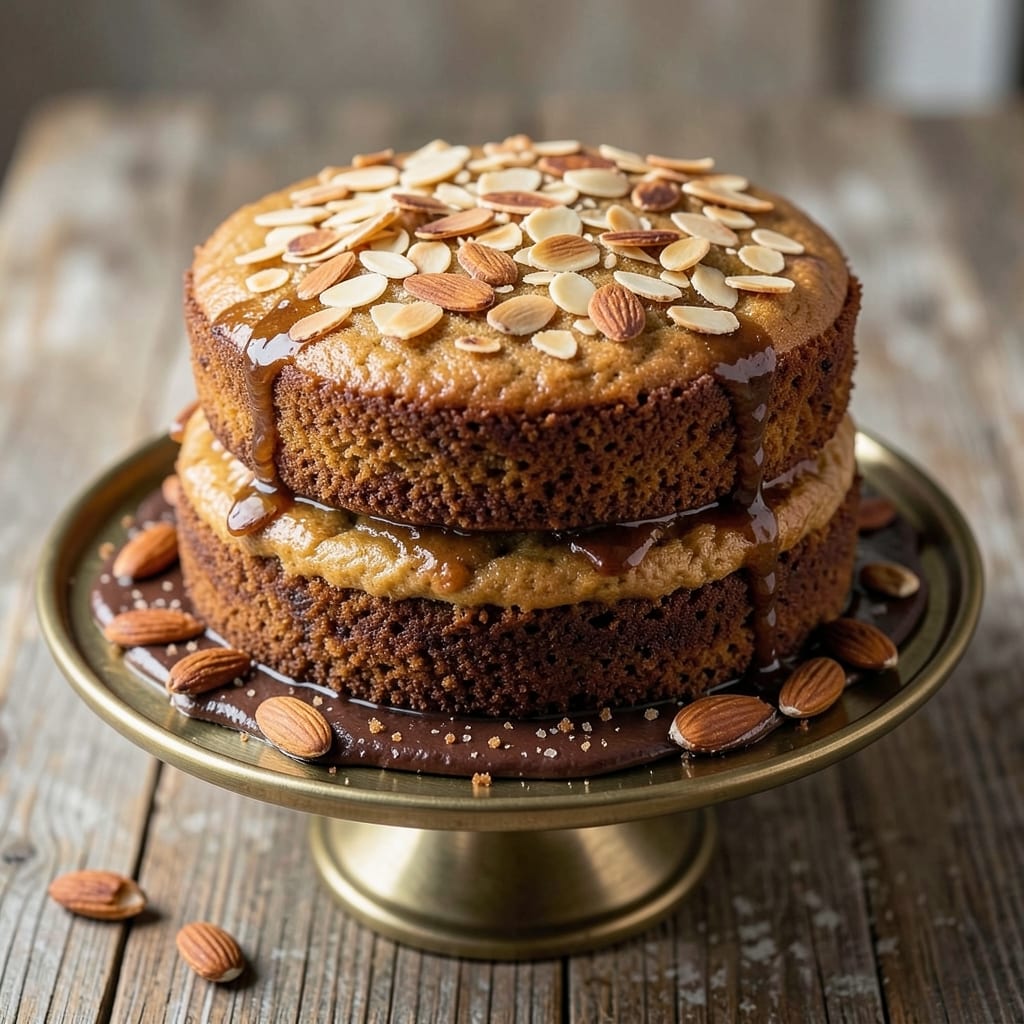
This gluten-free almond flour gingerbread cake delivers all the cozy holiday spice without the traditional flour—moist, tender crumb and a perfect crunch from toasted almonds. The secret lies in blending almond flour with just enough egg whites for structure while keeping the texture light and airy, not dense. I developed this recipe after years of baking gluten-free desserts that either turned out dry or too heavy, and this version finally nails the balance of moisture and spice.
The cake's magic comes from a moist core achieved through a reverse-creaming method (mixing dry ingredients with butter first) and a touch of sour cream that keeps it tender. Warm spices—ginger, cinnamon, and molasses—create that classic gingerbread flavor without overpowering the delicate almond base. It bakes up with a golden crust and a crackly top from toasted almonds, making it look as impressive as it tastes.
What makes this recipe stand out is its gluten-free adaptability—it doesn’t rely on traditional flour for structure, yet holds together beautifully. The almond flour adds natural sweetness and richness, while the spices infuse every bite with holiday warmth. This cake is perfect for celebrations, gift-giving, or simply treating yourself to a dessert that’s both indulgent and thoughtful.
For extra flair, dust with powdered sugar or drizzle with a simple glaze (powdered sugar + milk). The recipe also includes a vegan adaptation if needed, ensuring everyone at the table can enjoy it. Let’s get baking!
Ingredients for almond flour gingerbread cake
Eight ingredients blend almond flour magic with classic gingerbread warmth for a gluten-free masterpiece.
| Ingredient | Amount | Notes |
|---|---|---|
| Almond Flour 🌰 | 2 ½ cups | Super fine, unsifted for best texture |
| Large Egg Whites 🥚 | 4 whole | Room temperature, separated from yolks |
| Unsalted Butter 🧈 | 1 cup | Cold, cubed for reverse creaming |
| Light Brown Sugar 🍚 | 1 ½ cups | Packed firmly for accurate measure |
| Molasses 🍯 | ½ cup | Unsulphured for best flavor |
| Vanilla Extract 🌿 | 1 tbsp | Pure, high-quality vanilla |
| Ground Ginger 🌶️ | 2 tsp | Freshly ground preferred |
| Ground Cinnamon 🌿 | 2 tsp | Freshly toasted for depth |
| Ground Cloves 🌶️ | ½ tsp | Lightly toasted for warmth |
| Salt 🧂 | ¼ tsp | Fine sea salt preferred |
| Sour Cream 🥛 | ½ cup | Full-fat for moisture |
| Toasted Sliced Almonds 🌰 | ½ cup | Lightly toasted for crunch |
| Powdered Sugar 🍚 | ¼ cup | For dusting or glaze |
Almond flour is the backbone here—Bob's Red Mill or Anthony's Goods are my go-tos for consistent texture. The super-fine grind is key; anything coarser will make your cake dense. Toast your almonds first (350°F for 8-10 minutes) to deepen their flavor—they'll add that signature crunch. For the egg whites, separate them carefully and let them come to room temperature; this ensures proper volume. If you're short on time, King Arthur makes a great pre-separated egg white powder that works in a pinch.
No molasses? Maple syrup or dark corn syrup will work, though molasses gives that authentic gingerbread depth. Fresh ginger is ideal, but ground works at double the amount. The spices—ginger, cinnamon, and cloves—should be lightly toasted in a dry pan for 30 seconds to release their oils. For a vegan adaptation, replace the egg whites with 4 tbsp aquafaba (chickpea brine) or 1/2 cup applesauce. The sour cream adds moisture without overpowering; if you're avoiding dairy, coconut yogurt works beautifully. Pre-toasted almonds can be swapped for pecans or walnuts if you prefer.
Store the cake in an airtight container at room temperature for up to 3 days for best texture, though it reheats wonderfully. For longer storage, wrap tightly and freeze for up to 3 months. The almond flour keeps well in the pantry for 6 months in a sealed container, while spices should be stored in a cool, dark place for maximum potency. Dust with powdered sugar or drizzle with a simple glaze (powdered sugar + milk) right before serving—this adds that restaurant-quality finish without altering the cake's integrity.
Why You'll Love This Recipe
- No Mixer Needed: I swear by this recipe when my mixer’s on the fritz—just whip those egg whites until stiff peaks form, fold in the almond flour, and let the buttercream magic happen. No fancy tools, just elbow grease (and maybe a little patience).
- Molasses Magic: That deep, caramelized molasses cut through the nutty almond flour like a whisper—sweet but not cloying, with a spice kick that lingers. Honestly, it’s the secret weapon that makes this cake taste like a bakery treat, not a quick fix.
- Weeknight Crowd-Pleaser: Slice it for breakfast with a dollop of whipped cream, pack it in lunches, or serve it warm with vanilla ice cream. Between us, my husband’s the only one who knows it’s gluten-free—everyone else just thinks it’s the best gingerbread they’ve ever had.
- Budget-Friendly Luxury: Almond flour might sound pricey, but a little goes a long way, and the egg whites stretch the batter just enough for two full cakes. I’ll be real: it’s my go-to when I want to feel fancy without breaking the bank. Leftovers? They vanish faster than I can say “seconds, please.”
Step-by-step instructions for almond flour gingerbread cake
This gluten-free gingerbread delivers a moist core and spice-packed crunch without traditional flour.
Prep Ingredients for Perfect Texture
Toast the sliced almonds in a dry skillet over medium heat for 2-3 minutes until golden and fragrant. Watch closely—they burn quickly. Transfer to a plate to cool completely. Meanwhile, measure the 2.5 cups almond flour and sift it lightly if needed to remove any lumps, ensuring a smooth batter.
Separate the 4 whole large egg whites into a clean bowl, keeping them at room temperature. The butter should remain cold and cubed—this creates the reverse creaming method that yields a tender crumb. Preheat your oven to 350°F and grease an 8-inch round cake pan or line it with parchment paper for easy removal.
Cream Butter and Sugar for Lightness
In a stand mixer fitted with the paddle attachment, beat the 1 cup cold unsalted butter and 1.5 cups packed light brown sugar on medium speed for 3-4 minutes. The mixture should lighten in color and become fluffy, nearly doubling in volume. This step incorporates air, which creates the cake's signature tender texture.
Add the 0.5 cup molasses and 1 tbsp vanilla extract, mixing on low speed until fully combined. The molasses adds depth of flavor while keeping the cake moist. Scrape down the sides of the bowl with a spatula to ensure even mixing. Here's the thing—molasses can be thick, so don't rush this step or you'll end up with streaks.
Combine Dry Ingredients and Fold Wet Elements
In a separate bowl, whisk together the 2.5 cups almond flour, 2 tsp ground ginger, 2 tsp ground cinnamon, 0.5 tsp ground cloves, and 0.25 tsp salt. Sift the mixture directly into the butter-sugar mixture to prevent clumping. With the mixer on low speed, add the 4 whole large egg whites one at a time, mixing just until incorporated after each addition.
Pour in the 0.5 cup sour cream and mix on low until the batter is smooth and just combined. Avoid overmixing—this gluten-free batter thickens quickly. Fold in the 0.5 cup toasted sliced almonds by hand using a spatula, ensuring even distribution. The almonds add crunch and texture contrast to the tender crumb.
Bake to Golden Perfection
Pour the batter into the prepared cake pan and smooth the top with a spatula. Bake in the preheated 350°F oven for 35-40 minutes, or until a toothpick inserted into the center comes out clean. The cake should be golden brown on top with slight pull at the edges.
If the top browns too quickly, tent the cake with foil after 20 minutes to prevent over-browning while ensuring the center cooks through. The almond flour batter can dry out faster than traditional flour, so keep an eye on it during the last 10 minutes of baking. Let the cake cool in the pan for 10 minutes, then transfer to a wire rack to cool completely before slicing.
Pro Tips For Making Almond Flour Gingerbread Cake
- Whisk Egg Whites Cold: Pull the egg whites straight from the fridge—cold whites whip up fluffier and hold their shape better. I used to bring them to room temp first, and the meringue would collapse like a sad soufflé. Skip the waiting; just crack them into a chilled bowl.
- Toast Almond Flour First: Spread the almond flour on a baking sheet and toast it at 350°F (175°C) for 8–10 minutes until it smells nutty and deepens in color. This removes raw flour bitterness and gives the cake a richer, more complex flavor—like the difference between store-bought and homemade.
- Don’t Overmix the Batter: Once you fold in the whipped egg whites, stop mixing the second everything’s just combined. Overworking the batter deflates the air and makes the cake dense. Think "gentle hands"—lift and turn instead of stirring like you’re kneading dough.
- Use Molasses at Room Temp: Cold molasses is thick and gloopy, making it harder to measure accurately. Let the bottle sit in warm water for 10 minutes first—it’ll pour smoothly and mix evenly into the butter-sugar base. Skipping this step leads to streaks of unmixed molasses, and nobody wants that.
Troubleshooting this dish
Dry Cake Fix
If your almond flour cake turns out dry, the issue is likely overmixing or insufficient moisture. First, try adding 1-2 tbsp sour cream or milk to the batter before baking—this boosts moisture without altering flavor. For a second attempt, replace 2 tbsp almond flour with ground flaxseed (mixed with 1 tbsp water) to add binding properties. Also, ensure your almond flour is fresh—aged flour absorbs moisture faster.
Cracked Top Prevention
A cracked top usually means the cake baked too quickly. To fix this, reduce your oven temperature to 325°F and bake for 5-10 minutes longer, allowing even heat distribution. For future attempts, place a baking sheet under the cake pan to reflect heat upward more evenly. If cracks appear, they’re purely cosmetic—just cover with a simple powdered sugar glaze (mix ½ cup powdered sugar + 1 tbsp milk) to disguise them.
Batter Too Thick
Almond flour batters thicken fast, but you can adjust by adding 1-2 tbsp warm water or melted butter to loosen it. If the batter seems too dense after mixing, let it rest for 10 minutes before baking—this allows gluten-free ingredients to hydrate properly. For extra insurance, whisk the egg whites to stiff peaks and fold them in last, which adds air and lightness without thinning the batter.
Uneven Baking
Uneven baking often stems from poor heat circulation. Rotate your cake pan halfway through baking (at the 20-minute mark) to ensure even browning. If your oven has hot spots, use an oven thermometer to verify accuracy—many ovens run 25°F hotter than set. For stubborn hot spots, place a baking tray filled with water on the lower rack to add moisture and balance heat distribution.
Vegan Adaptation Issues
If your vegan version (using aquafaba or applesauce) fails, ensure proper substitution ratios. For aquafaba, whip it to stiff peaks before folding—this mimics egg white structure. If the cake collapses, reduce baking time by 5 minutes and check for doneness earlier. For extra stability, add 1 tbsp xanthan gum to the dry ingredients, which mimics gluten’s binding properties in traditional flour.
Spice Overpowering
If the gingerbread flavor feels too intense, balance it with a pinch of vanilla bean paste or a splash of orange zest (about 1 tsp). For future batches, reduce ground spices by ¼ tsp and increase molasses slightly to 0.55 cup—this softens the heat while maintaining depth. Taste your dry spice mix before combining with wet ingredients to adjust as needed.
Nutrition facts
Frequently asked questions
Why does this almond flour gingerbread recipe need egg whites?
Almond flour lacks gluten, which provides structure in traditional cakes. The 4 egg whites create air pockets through whipping, giving your cake that light, fluffy texture instead of a dense crumb. They also help bind the batter together without relying on gluten. For a vegan version, use aquafaba (chickpea brine) whipped to stiff peaks.
Can I make this cake without molasses?
Yes! Substitute ½ cup molasses with ½ cup maple syrup or dark corn syrup—both add moisture and depth. For a lighter touch, use ¼ cup honey + ¼ cup brown sugar. The molasses gives that classic gingerbread warmth, but these alternatives work beautifully. Just taste your spice mix first to adjust sweetness.
How do I prevent my cake from cracking on top?
Cracking happens when the cake bakes too quickly. To fix it, reduce oven temp to 325°F and bake for 5-10 minutes longer. For future attempts, place a baking sheet under the pan to reflect heat upward more evenly. If cracks appear, cover them with a simple powdered sugar glaze (½ cup powdered sugar + 1 tbsp milk) to disguise them.
Is this recipe naturally gluten-free and nut-free?
This recipe is gluten-free, but it does contain almond flour—so it's not nut-free. For a nut-free version, replace almond flour with 1:1 gluten-free oat flour (ensure certified gluten-free) or coconut flour (reduce other liquids by ¼ cup). The texture will differ slightly, but it’ll still be delicious.
How can I make this cake extra moist?
For a moister cake, add 1 tbsp sour cream or Greek yogurt to the batter. You can also brush warm cake with a simple syrup (equal parts sugar and water) while still warm. Another trick: Let the batter rest for 10 minutes before baking—this helps hydrate the almond flour for a lighter texture.