
Desserts
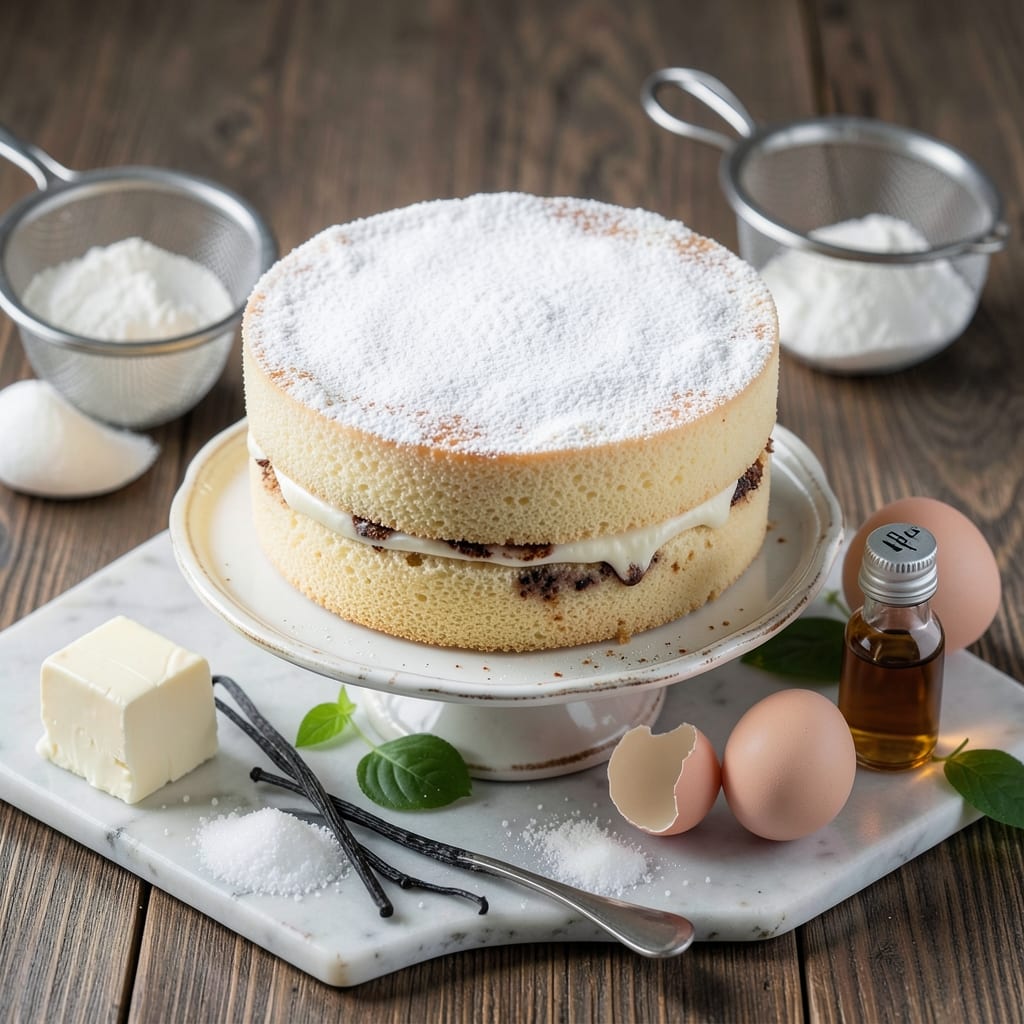
This American sponge cake recipe delivers the light-as-air vanilla cloud you've been craving—perfectly balanced between tender crumb and buttery richness. 💛 The secret lies in proper egg incorporation and gentle folding, creating layers that feel impossibly delicate yet sturdy enough to hold frosting. I've perfected this classic technique over years of baking, ensuring every slice stays moist for days.
The foundation begins with creaming butter and sugar until pale and fluffy—this step aerates the batter for that signature light texture. Whipped egg whites folded in at the end add height without density, while cake flour creates a fine, tender crumb. Baking at 350°F for 25-30 minutes yields golden edges and a springy center that defies soggy aftertaste.
What makes this sponge truly special is its versatility—serve it plain with whipped cream for an elegant dessert, or layer with lemon curd and berries for a showstopping trifle. The cake's neutral flavor profile also makes it ideal for flavored extracts like almond or coconut. For modern adaptations, gluten-free flour blends work beautifully while maintaining that signature lightness.
Mastering this recipe transforms simple ingredients into a bakery-quality dessert that's perfect for celebrations or quiet afternoons. The key is patience during folding and precise oven timing—once you nail these, you'll have a cake that's light enough to float but sturdy enough to impress. Let's get baking!
Ingredients for american sponge cake
Perfectly balanced butter, sugar, and eggs create this bakery-style vanilla sponge.
| Ingredient | Amount | Notes |
|---|---|---|
| Unsalted Butter 🧈 | 1 cup | Room temperature, softened |
| Granulated Sugar 🍚 | 1 ½ cups | White or light brown |
| Large Eggs 🥚 | 6 whole | Room temperature, separated |
| All-Purpose Flour 🌾 | 1 ½ cups | Sifted for lightness |
| Cake Flour 🌾 | ½ cup | For tender crumb |
| Vanilla Extract 🌿 | 2 tsp | Pure vanilla preferred |
| Baking Powder 🧂 | 1 ½ tsp | Aluminum-free preferred |
| Salt 🧂 | ¼ tsp | Fine sea salt |
| Vanilla Bean Paste 🌿 | 1 tsp | Optional for extra flavor |
| Powdered Sugar 🍚 | 1 cup | For dusting (optional) |
The butter and sugar are non-negotiable here—Crisco or European-style butter will give you that signature tenderness. I always grab Land O'Lakes unsalted butter from the grocery store's baking aisle, but Plugrá is worth the splurge for special occasions. Room temperature is key: press a finger into the butter, and it should leave a slight indent without spreading. Eggs should be at room temperature too—cold eggs won't whip properly. For the flours, Bob's Red Mill cake flour is my go-to for that signature fine crumb, but if you only have all-purpose, sift it extra well. The vanilla extract matters—McCormick pure vanilla is reliable, but a split vanilla bean gives you those flecks of flavor magic.
No vanilla bean paste? Extra vanilla extract (3 tsp total) works in a pinch. Short on cake flour? Substitute 1/4 cup all-purpose flour minus 2 tbsp—it won't be quite as tender, but still delicious. For the eggs, if you're worried about salmonella, pasteurized eggs are perfect. The baking powder should be fresh—if it's more than 6 months old, test it by mixing with water (should bubble). Salt is easy: Diamond Crystal kosher saltKing Arthur gluten-free 1:1 flour mimics the texture beautifully—just add 1/2 tsp xanthan gum to the mix.
Butter and sugar can sit out for up to 2 days at room temperature, but eggs should be used within 3 days once separated. The dry ingredients keep indefinitely in airtight containers. Once baked, this cake stays moist for 3 days wrapped at room temperature or 1 week refrigerated. For long-term storage, slice and freeze portions between parchment paper for up to 3 months. The secret to reheating? 10 seconds in the microwave with a damp paper towel—brings it back to life every time.
Why You'll Love This Recipe
- You’re using pantry basics here: butter, sugar, flour. No fancy ingredients, no last-minute grocery runs. And leftovers? They disappear faster than I can say “second slice.”
- No-Fuss Mixing: I swear by the creaming method here—just butter, sugar, and eggs until it’s light and fluffy. No electric mixer? A sturdy whisk and your arm muscles will do. (Between us, I’ve done it both ways.)
- Buttery Vanilla Bliss: That rich, tender crumb? All thanks to the butter and eggs whipped to perfection. It’s not too sweet, not too heavy—just right, with a subtle vanilla undertone that makes it feel like a hug.
- Layering Magic: This cake plays well with others. Stack it with whipped cream and berries for a dessert, or toast slices for French toast. My kids even beg for it plain—yes, really.
Step-by-step instructions for light-as-air vanilla sponge cake
Master the classic American technique for a cake so tender it nearly melts in your mouth.
🍳 Step 1: Whip Butter and Sugar Together
In a stand mixer fitted with the paddle attachment, beat the 1 cup unsalted butter (room temperature) and 1.5 cups granulated sugar on medium-high speed for 3-5 minutes until light and fluffy, nearly doubling in volume. You're looking for a pale, creamy texture that leaves ribbons when the beaters are lifted.
This step is critical—properly whipped butter and sugar incorporate air, which creates the signature lightness. If the mixture feels too soft or doesn't increase in volume, chill it in the fridge for 10 minutes and try again. The butter must be perfectly softened but not melted.
👨🍳 Step 2: Add Eggs Gradually for Maximum Lightness
Add the 6 whole large eggs (room temperature) one at a time, mixing on low speed for 30 seconds after each addition until fully incorporated. Then add the 2 teaspoons vanilla extract and 1 teaspoon vanilla bean paste, mixing on low speed for another 30 seconds.
The key here is patience—adding eggs too quickly can cause them to break or scramble. The mixture should become thick and glossy, with no visible streaks of egg. If you notice any curdling, reduce the mixer speed to low and continue mixing gently until smooth.
👨🍳 Step 3: Combine Dry Ingredients Gently
In a separate bowl, whisk together the 1.5 cups all-purpose flour, 0.5 cup cake flour, 1.5 teaspoons baking powder, and 0.25 teaspoon salt. Sift the dry ingredients directly into the wet mixture with the mixer running on low speed.
Mix just until the dry ingredients are barely combined—you should still see some flour streaks. Overmixing develops gluten, which makes the cake dense. Stop mixing as soon as the batter comes together. The final batter should be smooth, thick, and slightly shiny.
🥘 Step 4: Bake in Two Thin Layers
Preheat your oven to 350°F. Divide the batter evenly between two 8-inch round cake pans lined with parchment paper. Bake for 18-22 minutes until the tops spring back when gently touched and a toothpick inserted comes out clean.
Do not overbake—this cake relies on its moisture content for that signature tender crumb. The edges should be just set while the centers remain slightly soft. Rotate the pans halfway through baking for even heat distribution. Let the cakes cool in the pans for 10 minutes before transferring to a wire rack.
🍽️ Step 5: Assemble with Buttercream and Dust
Once completely cool, place one cake layer on a serving plate. Spread a thin layer of buttercream (made from the 1 cup powdered sugar and remaining butter) on top, then place the second layer on with the cut side up. Dust generously with the remaining powdered sugar for that classic American sponge cake finish.
The powdered sugar dusting isn't just decorative—it creates a delicate barrier that keeps the cake moist. For extra flair, you can also brush the layers with simple syrup before assembling. This method yields a cake that's light, tender, and perfectly balanced between sweetness and buttery richness.
Pro Tips For Making American Sponge Cake
- CREAM BUTTER SLOWLY: I learned this the hard way—dumping cold butter into sugar and whipping it at high speed just makes a greasy mess. Instead, soften the butter to room temp (it should dent but not flop), then beat it with the sugar on medium until it’s light and fluffy—about 3-4 minutes. That’s when the air gets trapped, and your cake won’t be dense.
- SEPARATE EGGS CAREFULLY: Crack eggs into a separate bowl first—yes, it’s a pain, but worth it. One speck of yolk in your flour means tough, chewy cake. Beat the yolks and whites separately until yolks are pale and ribbony, then fold whites into dry ingredients last—gently, like you’re tucking in a baby. Overmixing here kills the sponge.
- WEIGH FLOUR INSTEAD: Measuring flour by scooping and leveling is a gamble. This cake relies on precise ratios, and packed flour throws off the texture. Use a kitchen scale for both all-purpose and cake flour—aim for 120g all-purpose and 120g cake flour (for a standard recipe). The difference in crumb is night and day.
- BAKE UNTIL COOLER THAN YOU THINK: Your cake’s done when the center reads 205°F (96°C) and springs back slowly when pressed—not instantly. I used to pull them at 210°F, and they’d stay gummy inside. Let it cool 5 minutes in the pan, then transfer to a rack. Patience here keeps the crumb tender. (Your future self will thank you.)
Wine and beer pairings for these flavors
Classic White Wine
An American-style Chardonnay from Napa Valley—like Kendall-Jackson Vintner's Reserve—is my go-to pairing. Its crisp acidity and subtle citrus notes complement the cake's delicate vanilla flavor without overpowering it. Serve slightly chilled for that refreshing contrast against the buttery richness. 🍷
Dessert-Friendly Reds
If you prefer red wine, opt for a light-bodied Pinot Noir such as Meiomi or La Crema. These wines have enough fruitiness to stand up to the cake's sweetness while maintaining a smooth finish. Avoid heavy Cabernets—they'll clash with the sponge's tender texture.
Sparkling Options
For a celebratory touch, Prosecco or Italian sparkling wines like La Marca work beautifully. The effervescence cleanses your palate between bites, making each slice of cake taste even lighter. I love pairing this with a Prosecco spritz—just mix Prosecco with a splash of soda water and a twist of lemon.
Beer Pairings
A Belgian witbier such as Hoegaarden or Stella Artois is my top beer recommendation. The citrusy notes from coriander and orange peel mirror the cake's vanilla sweetness, while the light body prevents the beer from feeling heavy. For a darker option, try a honey wheat ale—the caramel undertones enhance the cake's buttery layers.
Non-Alcoholic Choices
For a refreshing non-alcoholic option, sparkling apple cider (like Martinelli's) or ginger beer (such as Feani) create delightful contrasts. The apple cider's tartness balances the cake's sweetness, while ginger beer adds a zesty kick that keeps your palate engaged. Serve both chilled for the best experience. 🍏
Nutrition facts
Frequently asked questions
Why does American sponge cake turn out dense sometimes?
Overmixing the batter or underwhipped butter/sugar are the most common culprits. Always mix dry ingredients just until combined (you should still see flour streaks), and whip butter and sugar until pale and fluffy—about 3-5 minutes. Cold eggs or butter can also cause density, so ensure everything is room temperature.
Can I make this recipe in a single 9-inch pan instead of two 8-inch pans?
Yes, but expect a taller, denser cake. Reduce baking time to 20-25 minutes and check for doneness early—the center should spring back when touched. For best results, stick to the two-layer method for that signature light, airy texture.
How do I store leftover American sponge cake?
Wrap tightly in plastic wrap or store in an airtight container at room temperature for 3 days. For longer storage, refrigerate for up to 1 week or freeze slices between parchment paper for 3 months. Thaw frozen slices at room temperature or reheat for 10 seconds in the microwave with a damp towel.
What's the difference between this and angel food cake?
This recipe uses butter and eggs for richness, while angel food cake relies solely on egg whites for structure and no butter at all. The result is a denser, more decadent texture here versus angel food's ultra-light, fluffy crumb. Both are American classics but serve different purposes!
Can I substitute cake flour if I don't have any?
Yes, but with adjustments. Replace 1 cup cake flour with 1 cup all-purpose flour minus 2 tablespoons. The cake will be slightly less tender but still delicious. For best results, sift the all-purpose flour extra well to mimic cake flour's fine texture.