
Desserts
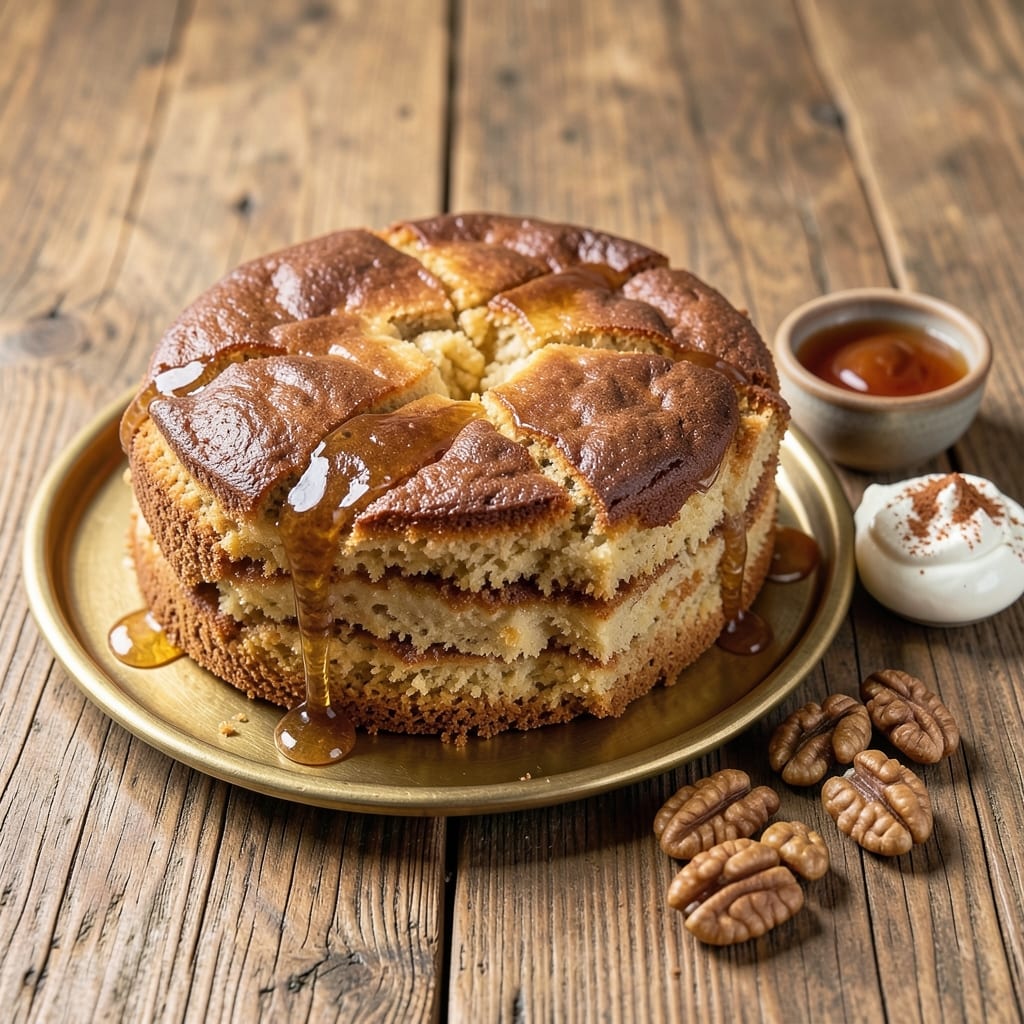
This ancient honey cake recipe transports you to a time when honey was both currency and medicine, its golden sweetness baked into layers of spiced goodness. 💛 The cake's signature moisture comes from a clever blend of honey and yogurt, creating tender crumbs that practically melt in your mouth with every bite. What makes this recipe special is its balance—warm cinnamon and cardamom complement the caramelized honey glaze without overpowering the natural sweetness. The secret lies in the layering technique: alternating moist cake batter with a honey-infused filling ensures each slice delivers that signature combination of spice and honey. Unlike modern cakes that often rely on buttercream, this version uses a simple syrup glaze that caramelizes beautifully in the oven, adding depth of flavor and a stunning golden finish. The result is a cake that's both nostalgic and refined, perfect for celebrations or quiet afternoons with tea. What you'll end up with is a cake that's rich yet not heavy, sweet yet balanced by warm spices, and moist enough to stay fresh for days. The caramelized honey glaze adds a sticky, aromatic crust that makes it impossible to resist cutting into the first slice. This recipe bridges ancient tradition with modern convenience—no special equipment needed, just patience and a few simple ingredients. Serve it warm with whipped cream or save it for a special occasion. The aroma alone will have everyone asking for the recipe. Here's how to make it!
Ingredients for ancient honey cake
Golden layers of spice and honey await—just gather these ingredients for a cake steeped in tradition.
| Ingredient | Amount | Notes |
|---|---|---|
| Unsalted Butter 🧈 | 1 cup | Softened to room temperature |
| Raw Honey 🍯 | 1 ½ cups | Wildflower or clover variety |
| Plain Yogurt 🥛 | 1 cup | Full-fat preferred |
| All-Purpose Flour 🌾 | 3 cups | Sifted before measuring |
| Granulated Sugar 🍚 | 1 ½ cups | Light brown preferred |
| Ground Cinnamon 🌿 | 2 tsp | Freshly ground preferred |
| Ground Cardamom 🌶️ | 1 tsp | Lightly toasted for aroma |
| Baking Powder 🍞 | 2 tsp | Aluminum-free preferred |
| Salt 🧂 | ½ tsp | Fine sea salt |
| Large Eggs 🥚 | 2 whole | Room temperature |
| Vanilla Extract 🌸 | 1 tbsp | Pure vanilla preferred |
| Lemon Zest 🍋 | 1 tbsp | Freshly grated |
| Lemon Juice 🍋 | 2 tbsp | Freshly squeezed |
| Heavy Cream 🥛 | ½ cup | For glaze |
The honey is the soul of this cake, so choose a high-quality, local variety if possible. Whole Foods or specialty grocers often carry wildflower or clover honey with deeper flavor. The yogurt adds moisture—full-fat Greek yogurt works best, but regular plain yogurt in a pinch. Cardamom can be tricky to find; check the spice aisle at Penzeys or Indian grocery stores for whole pods to grind fresh. For the butter, European-style brands like Plugrá or President melt beautifully, but any good unsalted butter will do. The cinnamon should be freshly ground—pre-ground loses its aroma quickly.
No cardamom? Double the cinnamon and add 1/4 tsp nutmeg for warmth. Substituting honey? Maple syrup works at 1:1 ratio, but the flavor will be less complex. For a lighter cake, reduce the sugar to 1 cup and add 1/4 cup more flour. The lemon zest and juice brighten the flavors—Meyer lemons add a floral note if you can find them. The vanilla extract should be pure; imitation won't have the same depth. For the glaze, if you're avoiding dairy, coconut cream works beautifully—just reduce the heat slightly to prevent curdling.
Store the cake in an airtight container at room temperature for up to 5 days—it actually improves as the flavors meld. For longer storage, wrap tightly in plastic and refrigerate for up to 2 weeks. The glaze hardens when chilled, so bring it to room temperature before serving. This cake freezes beautifully too—portion into slices and freeze between parchment for easy single servings. Reheat slices at 300°F for 10 minutes to restore moisture if needed.
Why You'll Love This Recipe
- Foolproof Mix-In: I swear by this recipe because it’s literally just creaming butter, folding in yogurt, and stirring honey into the batter—no eggs, no fuss. The flour and sugar do all the heavy lifting, so even if I rush, it still turns out tender and moist.
- Honey’s Rich Kiss: That raw honey isn’t just sweet—it’s deep, with a floral warmth that lingers. The yogurt keeps it light, but the butter and sugar make every bite rich and satisfying, like a hug in cake form.
- Breakfast or Dessert: Honestly, I eat this for breakfast with tea or as a midnight snack—it’s that good. The simplicity means it works for brunch crowds or a quiet afternoon pick-me-up, and the neutral flavor lets it shine in any moment.
- Budget Baking Wins: This cake costs next to nothing to make—just five ingredients, most of which I already have. A single batch stretches into leftovers that stay fresh for days, so I’m not scrambling for dessert or a quick snack.
Step-by-step instructions for ancient honey cake
Here's how to create layers of spiced honey richness with a caramelized glaze.
👨🍳 Step 1: Cream Butter, Honey, and Sugar Together
In a stand mixer fitted with the paddle attachment, combine the 1 cup unsalted butter, 1.5 cups raw honey, and 1.5 cups granulated sugar. Beat on medium speed for 5-7 minutes until the mixture lightens in color and becomes thick and fluffy. You'll notice it nearly triples in volume and leaves a ribbon trail when the paddle is lifted.
This step is where the cake's signature moisture comes from—the honey and butter create an emulsified base that prevents dryness. I press the paddle against the bowl occasionally to scrape down the sides and ensure even incorporation. If the mixture seems too thick after beating, let it sit at room temperature for 5 minutes to soften slightly before proceeding.
👨🍳 Step 2: Incorporate Yogurt, Eggs, and Aromatics
Reduce the mixer speed to low and add the 1 cup plain yogurt, mixing just until combined. Add the 2 whole large eggs, one at a time, mixing for 30 seconds after each addition. Then stir in the 1 tbsp vanilla extract, 1 tbsp lemon zest, and 2 tbsp lemon juice by hand with a silicone spatula.
The yogurt adds tangy depth while keeping the texture tender, and the lemon brightens the warm honey flavors. I like to give the bowl a quick scrape-down here to ensure the lemon zest distributes evenly—those citrus oils are potent and should be well incorporated. Don't overmix after adding the eggs or you'll develop gluten in the flour later.
👨🍳 Step 3: Combine Dry Ingredients Gently
In a separate bowl, whisk together the 3 cups all-purpose flour, 2 tsp ground cinnamon, 1 tsp ground cardamom, 2 tsp baking powder, and 0.5 tsp salt. Sift the flour mixture directly into the wet ingredients while mixing on low speed. Once combined, mix for another 30 seconds just until the flour disappears—you should still see small streaks of flour.
Overmixing at this stage creates tough cake layers. I use a spatula to gently fold any stubborn dry spots into the batter. The cardamom should perfume the air noticeably—this is where the cake's ancient spice character emerges. For best results, let the batter rest for 10 minutes at room temperature before baking to allow the flour to fully hydrate.
🔥 Step 4: Bake in Two Layers for Perfect Rise
Preheat your oven to 350°F. Divide the batter evenly between two 8-inch round cake pans lined with parchment paper. Bake for 25-30 minutes or until a toothpick inserted in the center comes out clean. The cake should spring back slightly when pressed in the center and have a golden-brown hue.
I rotate the pans halfway through baking for even heat distribution. The honey makes these cakes dense, so they need careful monitoring—they'll continue cooking slightly after removal. Let each layer cool in the pans for 10 minutes before transferring to a wire rack to cool completely. This gradual cooling prevents cracking as they set.
🍳 Step 5: Assemble with Honey Glaze
Once both layers are completely cool, level the tops if needed. For the glaze, combine the 0.5 cup heavy cream with 2 tbsp of the reserved raw honey in a small saucepan. Heat over medium-low while stirring constantly until the honey dissolves and the mixture reaches 160°F—it should coat the back of a spoon but still be pourable.
Brush the glaze evenly over the top and sides of the cake, allowing it to drip slightly down the sides for that authentic honey cake appearance. I work quickly here as the glaze sets fast. Let the cake sit at room temperature for 1 hour before slicing to allow the glaze to set properly. The finished cake should have moist, spice-infused layers with a caramelized honey sheen on top.
Pro Tips For Making Ancient Honey Cake
- Whisk Butter Slowly: I used to dump cold butter into warm honey and wonder why my batter turned grainy. Instead, melt the butter first, then let it cool to body temperature before mixing with honey—about 10 minutes. This keeps the honey from seizing up and makes the cake tender, not dense.
- Strain That Yogurt: Thick, lumpy yogurt? Skip it. Strain it through a fine-mesh sieve or cheesecloth for 10 minutes to remove excess liquid—this prevents a gummy, soggy cake. (Yes, even if your yogurt looks perfect. Trust me.)
- Don’t Overmix the Dough: The second you add flour, stop stirring after 30 seconds. Overworking the dough develops gluten, turning your cake into a dry brick. Fold just until combined—lumps and all—then let the oven do the rest.
- Bake Low and Slow: Ancient honey cakes need patience. Bake at 325°F (160°C) for the full time—no peeking! The honey caramelizes gradually, giving that deep, golden crust. High heat = burnt edges, raw center. (I learned this after one very sad cake.)
Pro cooking tips for ancient honey cake
Honey-Butter Emulsion
The secret to this cake's signature moisture lies in properly emulsifying the butter, honey, and sugar mixture. Beat these ingredients together for 5-7 minutes until they lighten in color and become thick—this creates tiny air pockets that make the cake tender. I use a stand mixer with paddle attachment for this step, as hand-whisking won't incorporate enough air. If your mixture seems too thick after beating, let it rest at room temperature for 5 minutes to soften slightly before proceeding. This emulsion is what prevents dryness in the final cake. 🔥
Layering Technique
Divide the batter evenly between two 8-inch round cake pans—this ensures even rise and prevents doming. I recommend using parchment-lined pans to avoid sticking, especially with honey's natural stickiness. Bake at 350°F for 25-30 minutes, rotating the pans halfway through for even heat distribution. The honey makes these cakes dense, so they need careful monitoring—they'll continue cooking slightly after removal. Let each layer cool in the pan for 10 minutes before transferring to a wire rack to prevent cracking.
Glaze Temperature Control
The glaze requires precise temperature control to achieve that perfect caramelized sheen. Heat the heavy cream and honey mixture over medium-low heat until it reaches 160°F—this ensures the honey dissolves completely without burning. Use a candy thermometer for accuracy, as visual cues can be misleading. Brush the glaze evenly over the cake, allowing it to drip slightly down the sides for that authentic look. Let the cake sit at room temperature for 1 hour before slicing to allow the glaze to set properly. This step transforms the cake from good to extraordinary. ✨
Spice Toasting Tip
For maximum flavor, lightly toast the cardamom before grinding it. Spread the whole pods on a dry skillet over low heat for 1-2 minutes until fragrant—this enhances their natural aroma. If you're using pre-ground cardamom, skip this step, but don't skip the toasted flavor! The cinnamon should also be freshly ground for the best results. I like to give the batter a 10-minute rest after mixing to allow the flour to fully hydrate, which improves the texture of the final cake. This small step makes a big difference in the crumb structure.
Oven Preheating
Preheat your oven to 350°F for at least 15 minutes before baking. This ensures the cake pans are at the correct temperature when the batter goes in, promoting even rise and proper browning. I use an oven thermometer to verify accuracy—many home ovens run hot or cold. Place the cake pans in the middle rack of the oven for consistent heat distribution. The honey in the batter can cause uneven baking, so monitor the cake closely, especially in the last 5 minutes of baking. A toothpick inserted in the center should come out clean. 💫
Resting the Batter
After mixing all ingredients, let the batter rest for 10 minutes at room temperature. This allows the flour to fully hydrate and the gluten to relax, resulting in a tender cake rather than a dense one. I cover the bowl loosely with plastic wrap to prevent a skin from forming. During this time, I also prepare my baking pans by lining them with parchment paper and greasing lightly with butter. This resting period is often overlooked but is crucial for achieving the perfect texture in honey cakes. Patience here pays off in every bite. 💡
Nutrition facts
Frequently asked questions
Can I make this honey cake without cardamom?
If you can't find cardamom, double the cinnamon to 4 teaspoons and add ¼ teaspoon nutmeg for warmth. The cake will still taste delicious—just with a slightly different spice profile. For extra depth, consider adding ½ teaspoon ground ginger as well. The honey and yogurt base will still provide that signature moisture.
How do I store leftovers to keep them fresh?
Store the cake in an airtight container at room temperature for up to 5 days—it actually improves as flavors meld. For longer storage, wrap tightly in plastic and refrigerate for up to 2 weeks. The glaze hardens when chilled, so bring it to room temperature before serving. To reheat slices, warm at 300°F for 10 minutes to restore moisture.
Why did my cake turn out dense instead of moist?
Overmixing the batter is the most common cause. Mix just until the flour disappears (30 seconds after combining). Also, ensure you properly emulsified the butter, honey, and sugar by beating for 5-7 minutes until light and fluffy. If your oven runs hot, reduce temperature to 325°F and check for doneness 5 minutes early.
Can I make this cake in a single layer instead of two?
Yes! Use a 9-inch round pan and bake for 35-40 minutes. Reduce the baking powder to 1.5 teaspoons to prevent excessive rise. The texture will be slightly denser, but still delicious. For a taller cake, use a 6-inch pan and bake for 40-45 minutes, checking frequently after 30 minutes.
What's the best way to serve this cake?
Serve warm with a dollop of whipped cream or a scoop of vanilla ice cream to balance the rich honey flavors. For a traditional touch, drizzle with extra honey before serving. The cake pairs beautifully with chai tea or espresso. Cut into thick slices to showcase the layered texture and caramelized glaze.