
Desserts
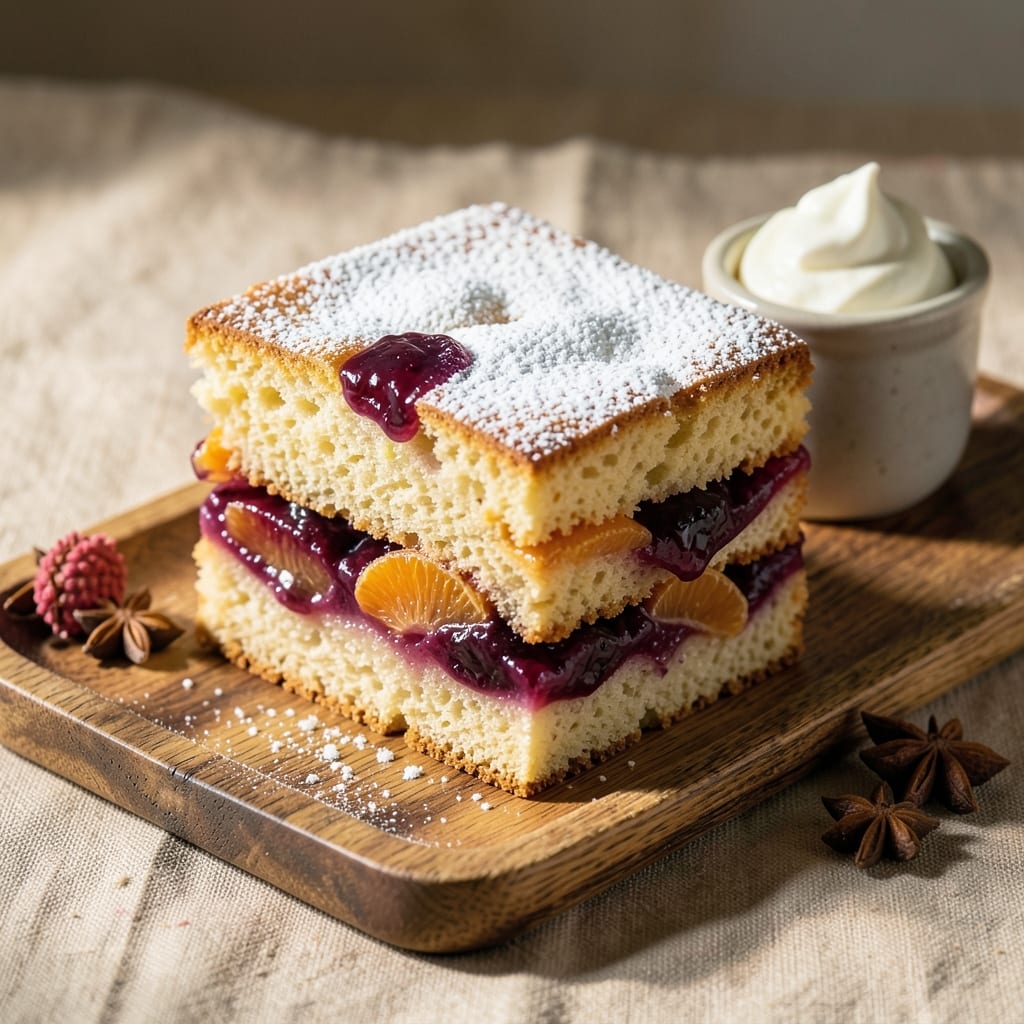
This Asian sponge fruit cake brings tropical flavors to your table with layers of light, airy sponge and rich coconut swirls. 💛 The secret lies in a perfectly balanced sponge cake base—moist yet tender—that soaks up the sweet fruit filling without becoming soggy. Inspired by Southeast Asian baking traditions, this recipe combines the best of both worlds: a delicate, fluffy texture with vibrant fruit flavors and a hint of coconut aroma that makes every slice irresistible.
The magic happens in the layers: a buttery, egg-rich sponge cake alternates with a luscious fruit filling—think candied pineapple, mango jam, or even fresh tropical fruits—that keeps the cake juicy for days. A swirl of coconut cream or whipped cream adds a velvety contrast, while toasted coconut flakes on top give it that signature Asian bakery finish. Unlike traditional fruit cakes that can dry out, this version stays moist thanks to a simple trick in the sponge batter.
What you’ll end up with is a stunning, multi-layered cake that’s perfect for celebrations or a special dessert treat. The coconut swirls add visual appeal, while the tropical fruit filling ensures every bite is bursting with flavor. Whether you’re serving it at a gathering or simply indulging in a slice, this cake delivers restaurant-quality results with a homemade touch.
Ready to bake? We’ll walk you through each step—from preparing the sponge layers to assembling the cake and adding those final coconut garnishes—for a dessert that’s as impressive as it is delicious.
Ingredients for asian sponge fruit cake
Light sponge layers, tropical fruit, and coconut swirls—this cake delivers restaurant-quality dessert magic.
| Ingredient | Amount | Notes |
|---|---|---|
| All-Purpose Flour 🌾 | 2 ½ cups | Sifted for light texture |
| Granulated Sugar 🍚 | 2 cups | Superfine preferred for smoothness |
| Large Eggs 🥚 | 6 whole | Room temperature for best mixing |
| Unsalted Butter 🧈 | 1 ½ cups | Softened but not melted |
| Baking Powder 🍞 | 2 tsp | Ensures proper rise |
| Salt 🧂 | ½ tsp | Fine sea salt preferred |
| Vanilla Extract 🌸 | 2 tsp | Pure vanilla for authentic flavor |
| Coconut Milk 🥥 | 13 ½ oz | Full-fat for rich coconut flavor |
| Shredded Coconut 🥥 | 1 cup | Toasted for extra aroma |
| Candied Pineapple 🍍 | 1 ½ cups | Chopped into small pieces |
| Mango Jam 🥭 | 1 cup | High-quality for vibrant flavor |
| Whole Milk 🥛 | ½ cup | For sponge moisture |
The flour and sugar are your foundation. King Arthur or Gold Medal flour gives the best texture—no substitutions here. For the sugar, superfine is ideal, but if you only have regular, pulse it in a food processor for 30 seconds. Eggs should be room temperature, so take them out 30 minutes before baking. The butter? Plugrá or Land O'Lakes work perfectly—just make sure it's softened, not melted. Toast your shredded coconut in a dry pan for 3-4 minutes until golden—this adds that signature bakery aroma. For the tropical fruit, Maui Brand pineapple or Mangosteen jam elevates the flavor beyond basic store brands.
No vanilla extract? Vanilla bean paste works too—just use half the amount. Substituting coconut milk? Full-fat canned coconut milk is non-negotiable here—the lighter versions won’t give that rich texture. Running short on candied pineapple? Fresh mango purée with a touch of sugar (simmer 1 cup purée with 2 tbsp sugar until thickened) does the trick. For the jam layer, Trader Joe’s mango jam is my go-to—it’s bright and not overly sweet. If you’re feeling adventurous, swap the mango for guava or lychee jam—both pair beautifully with coconut.
Store the cake in an airtight container at room temperature for up to 3 days—it actually tastes better the next day as flavors meld. For longer storage, wrap tightly in plastic and refrigerate for up to 1 week. The coconut topping stays crisp for 2 days if kept in a sealed container. Freeze individual layers (wrapped in plastic) for up to 3 months—thaw overnight in the fridge before assembling. Pro tip: Brush the cake layers with a little coconut milk before adding the fruit filling to keep everything moist.
Why You'll Love This Recipe
- No Fuss Mixing: I swear by this recipe because it’s all about the whisk-and-pour magic. The butter and sugar start light and fluffy—no stand mixer required—then the eggs come in to bind it all together like a dream. My hands stay clean, and the batter’s ready in under 10 minutes.
- Sweet & Light Magic: That perfect balance of tender crumb and subtle sweetness? It’s all in the ratio of sugar to eggs. The butter keeps it moist without being heavy, and the baking powder gives it just enough lift to feel special—not dense, not dry, but exactly what you want.
- Birthday or Breakfast: Honestly, this cake is my go-to for anything. Slice it fresh for a celebration, or stash it in the fridge for a quick breakfast toast with jam. The sponge holds up beautifully—no one will guess it’s not a bakery buy.
- Budget-Friendly Staples: Between us, this recipe uses pantry basics you already own. Flour, sugar, butter—no specialty ingredients, no markup. I’ve made it for potlucks, gifts, and even a last-minute dessert, and it never fails to impress without breaking the bank.
Step-by-step instructions for tropical layers with coconut swirls
Here's how to create this vibrant, multi-layered cake with perfect sponge texture and tropical flavors.
👨🍳 Step 1: Prepare the Sponge Layers
Preheat your oven to 350°F and grease three 6-inch round cake pans. Line the bottoms with parchment paper for easy removal. In a large mixing bowl, sift together the 2.5 cups all-purpose flour, 2 tsp baking powder, and 0.5 tsp salt. Set aside.
In a separate large bowl, beat the 1.5 cups softened butter and 2 cups granulated sugar on medium speed until light and fluffy—about 3-4 minutes. Add the 6 room-temperature eggs one at a time, mixing well after each addition. Scrape down the sides of the bowl as needed. Stir in the 2 tsp vanilla extract and 0.5 cup whole milk until just combined.
Gradually add the dry ingredients to the butter mixture, mixing on low speed until just combined—don't overmix. Divide the batter evenly among the three prepared pans. Bake for 25-30 minutes, or until a toothpick inserted in the center comes out clean. Let the layers cool in the pans for 10 minutes, then transfer to a wire rack to cool completely.
🥘 Step 2: Create the Tropical Filling
In a medium bowl, combine the 1 cup mango jam and 1.5 cups chopped candied pineapple. Gently warm this mixture in a small saucepan over low heat for 2-3 minutes, stirring until smooth and well blended. Remove from heat and let cool to room temperature. This will create the vibrant filling between your layers.
In a separate small bowl, toast the 1 cup shredded coconut in a dry skillet over medium heat for 3-4 minutes, stirring constantly until golden brown and fragrant. Let cool completely, then set aside for the swirl layer.
🍳 Step 3: Assemble the Cake Layers
Place the first cake layer on a serving plate or cake stand. Spread an even layer of the mango-pineapple filling over the top, leaving about ½-inch border uncovered. Repeat with the second layer and remaining filling. For the final layer, spread the toasted coconut evenly over the top of the cake, pressing gently to create a thin, even layer.
Using an offset spatula or butter knife, gently spread the coconut layer toward the edges of the cake, creating a beautiful swirl pattern. This not only looks stunning but helps distribute the coconut flavor throughout each slice. For extra visual appeal, sprinkle additional toasted coconut around the base of the cake.
🔥 Step 4: Add the Coconut Swirl Topping
In a small saucepan, combine the 13.5 oz coconut milk with ½ cup granulated sugar and bring to a gentle simmer over medium heat. Stir occasionally until slightly thickened—about 5-7 minutes. Remove from heat and let cool slightly.
Pour the coconut mixture over the assembled cake, allowing it to drip down the sides. Use the back of a spoon to gently spread the coconut sauce evenly over the top and sides of the cake. For a professional finish, use a piping bag fitted with a star tip to pipe decorative swirls of coconut sauce around the cake's perimeter. Let the cake sit at room temperature for 1 hour to allow the sauce to set.
⏰ Step 5: Chill and Serve
Once the coconut sauce has set, cover the cake loosely with plastic wrap and refrigerate for at least 4 hours, or preferably overnight. This chilling time allows all the flavors to meld together and makes slicing much cleaner. When ready to serve, use a sharp serrated knife to cut through the cake layers, wiping the blade between slices for clean cuts.
The finished cake should have moist, tender sponge layers, vibrant mango-pineapple filling, and a rich coconut swirl on top. Each slice reveals beautiful layers of tropical flavors and textures—perfect for special occasions or as a delicious treat any time of year.
Pro Tips For Making Asian Sponge Fruit Cake
- CREAM BUTTER FIRST: I learned this the hard way—mixing cold butter into sugar until it’s light and fluffy (about 3-5 minutes) makes a real difference. Skip this, and your cake will turn out dense, even if the recipe says "cream." Use room-temperature butter, but don’t let it get soft—press it gently, and you’ll know it’s ready when it leaves a faint imprint.
- SIFT FLOUR LIKE YOU MEAN IT: Don’t just dump flour into your bowl and stir. Sift it twice—once before mixing and once after folding in—especially if your flour is old or packed tightly. This keeps air in the batter, and that’s what gives Asian sponge cakes their signature lightness. (Yes, even if you’re impatient like me.)
- STOP WHEN IT LOOKS DONE: Overmixing is the enemy. Once your batter is just combined—no dry flour streaks, but not gloppy—stop. Beat another 10 seconds, and you’ll end up with a tough cake. The moment it starts to cling to the beaters, you’ve gone too far. Trust your eyes, not the recipe’s vague "mix until smooth."
- USE A THERMOMETER FOR THE OVEN: That "350°F" setting on your oven isn’t always accurate. Invest in an oven thermometer and bake at 325°F instead—this prevents over-browning while keeping the center moist. I was skeptical until I tried it: the cake stays tender longer, and the edges don’t burn. (Your future self will thank you.)
Creative variations of this recipe
Japanese Melon Pan Twist
For a lighter, melon pan-inspired version, replace the traditional round pans with melon pan molds (available at Asian grocery stores or online). These molds create a distinctive crusty top with a hollow center, perfect for holding extra coconut cream. Use the same sponge batter but add 1 tbsp honey to the sugar for subtle sweetness. Brush the tops with egg wash before baking for a golden, crackly crust. 🌟
Southeast Asian Tropical Twist
Swap the mango jam for jackfruit curd or durian jam to give this cake a bold Southeast Asian flavor profile. Add ½ tsp pandan extract to the sponge batter for an aromatic touch. Garnish with crushed peanuts and lime zest for a refreshing contrast. This version pairs beautifully with thai iced tea for a dessert-and-drink combo. 🍹
Spiced Coconut Variation
Infuse the coconut milk with 1 cinnamon stick and 3 cardamom pods while heating for the swirl topping. Add ½ tsp ground ginger to the sponge batter for warmth. This spiced version works wonderfully with chocolate ganache drizzled between layers instead of fruit jam. Perfect for fall or winter celebrations! 🍂
Vegan Adaptation
Replace butter with 1.5 cups vegan butter (like Miyoko's) and eggs with 6 flax eggs (6 tbsp ground flaxseed + 12 tbsp water). Use coconut oil instead of coconut milk for the swirl topping. For the fruit filling, blend 1 cup fresh mango purée with 1 tbsp agar-agar to set it. This version keeps all the tropical vibes while being completely plant-based. 🌱
Mini Cake Bites
Bake the sponge batter in 24 mini muffin tins (greased and lined) for bite-sized versions. Fill each cup halfway with mango jam, then top with a dollop of coconut whipped cream before baking. Once cooled, drizzle with melted white chocolate and sprinkle with toasted coconut. These make perfect party favors or afternoon treats! 🍰
Layered Fruit Fusion
Create a four-layer cake by adding a lychee jelly layer between the sponge and fruit filling. Mix 1 cup lychee jelly with ½ cup coconut cream and chill until firm. Alternate with the mango-pineapple filling for a sophisticated, multi-textured dessert. This version feels extra special for birthdays or anniversaries. ✨
Nutrition facts
Frequently asked questions
Why does my sponge layer turn out dense instead of light?
Overmixing the batter or using cold eggs/butter are the most common culprits. Always mix just until combined—stop when no dry flour remains. Room-temperature ingredients (especially eggs and butter) are critical for proper aeration. Also, ensure your baking powder is fresh (test by mixing 1 tsp with water—it should fizz immediately).
Can I make this cake without coconut milk?
Yes, but the flavor will be less authentic. For the swirl topping, substitute ½ cup heavy cream + ½ cup coconut cream substitute (like coconut milk powder mixed with water). For the sponge, replace the coconut milk in the batter with ½ cup whole milk + ½ cup Greek yogurt—this maintains moisture while keeping the texture light.
How do I prevent soggy bottom layers?
Bake the sponge layers until completely cool before assembly (at least 2 hours at room temperature). For extra insurance, brush each cooled layer with a thin layer of coconut milk before adding filling. Also, use a serrated knife to cut clean slices—damp layers often occur when the knife drags through the filling.
What's the best way to store leftovers?
Wrap individual slices tightly in plastic wrap and store at room temperature for 2 days. For longer storage, refrigerate the whole cake (covered) for up to 5 days. The coconut topping stays crispest when refrigerated. To revive, let slices sit at room temperature for 10 minutes before serving.
Can I use fresh fruit instead of jam?
For the filling, blend 2 cups mixed tropical fruit (like mango, pineapple, and papaya) with 2 tbsp sugar and 1 tsp lemon juice. Simmer until thickened (5-7 minutes), then cool completely. Fresh fruit adds vibrant color but may require more sugar to balance acidity—taste before assembling.