
Desserts
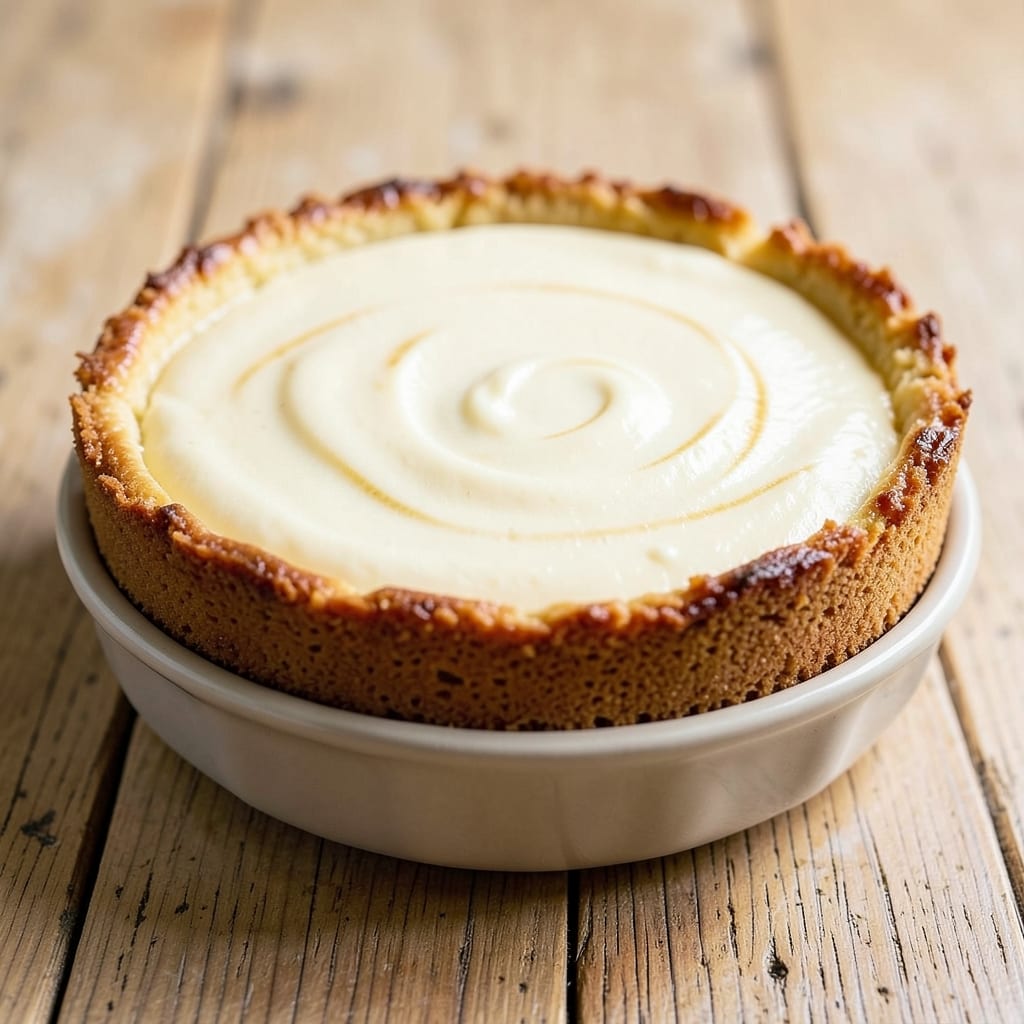
This Australian baked cheesecake recipe delivers the perfect balance of a golden, buttery crust and a silky, creamy center that's become a staple at Aussie gatherings. 💛 The secret lies in a crisp biscuit base that holds its shape while the filling bakes to a smooth, jiggly finish—no watery centers here. I've perfected this version over years of baking, ensuring every slice meets that ideal texture we all crave.
The crust starts with a blend of crushed digestive biscuits and melted butter, creating a sturdy foundation that won't crumble. Meanwhile, the filling combines cream cheese, eggs, and sugar for that signature Australian richness, with a touch of vanilla and sometimes a hint of citrus zest for brightness. Baking at 350°F for 50-60 minutes ensures the center stays perfectly set without overcooking.
What makes this recipe truly special is how it transforms a simple dessert into an event-worthy centerpiece. The crust stays crisp while the filling remains velvety, creating a contrast that's impossible to resist. Whether you're serving it at a holiday dinner or enjoying a slice with afternoon tea, this cheesecake delivers restaurant-quality results at home.
For an extra Australian touch, consider adding a golden syrup swirl or a sprinkle of crushed Vegemite on top—trust me, it's a flavor combination that surprises in the best way. Let's get baking!
Ingredients for australian baked cheesecake
Golden crust, creamy center—just eight ingredients transform into Aussie magic.
| Ingredient | Amount | Notes |
|---|---|---|
| Digestive Biscuits (graham crackers) 🍪 | 2 ½ cups | Crushed into fine crumbs |
| Unsalted Butter 🧈 | ½ cup | Melted, full-fat preferred |
| Cream Cheese (full-fat) 🧀 | 16 oz | Room temperature, Philadelphia brand |
| Granulated Sugar 🍚 | 1 ½ cups | White or light brown |
| Large Eggs 🥚 | 4 whole | Room temperature, separated |
| Pure Vanilla Extract 🌿 | 1 tbsp | Bourbon-infused for depth |
| Lemon Zest 🍋 | 1 tbsp | Freshly grated, bright flavor |
| All-Purpose Flour 🌾 | ½ cup | For crust stability |
| Golden Syrup (or honey) 🍯 | ¼ cup | For Australian touch |
| Powdered Sugar 🍚 | ¼ cup | For dusting top |
| Salt 🧂 | ½ tsp | Fine sea salt |
| Crushed Vegemite 🍞 | 1 tsp | Optional Aussie surprise |
The crust makes or breaks this. Arnott's Digestive Biscuits (or graham crackers) are non-negotiable—they hold their shape better than store-brand alternatives. Costco or local bakeries often have the best stock. For the butter, Plugrá or Kerrygold Irish butter gives that rich, golden color. If you can't find digestive biscuits, crush high-quality graham crackers into fine crumbs—no big chunks. The flour in the crust isn't just filler; it helps bind everything together so the filling doesn't leak. Pro tip: Toast the crumbs with the melted butter for 2 minutes before pressing into the pan—it adds extra crunch.
No golden syrup? Honey or maple syrup works in a pinch, though it's not the same. The cream cheese is where you can splurge—Philadelphia brand melts the smoothest, but any full-fat block works if softened properly. Eggs should be room temperature (pop them in warm water for 5 minutes if cold). For the vanilla, bottled bourbon-infused extract adds depth, but pure vanilla works too. The lemon zest is optional but brightens the whole thing—use a microplane for maximum flavor. Want to skip the Vegemite? A sprinkle of crushed hazelnuts adds texture instead.
This keeps 4-5 days in the fridge, fully wrapped. The crust stays crisp for the first 2 days, then softens slightly—still delicious, just less crunchy. For make-ahead magic, bake it 1 day ahead and let it chill. It actually tastes better the next day as flavors meld. To reheat, warm at 300°F for 10 minutes. Freezes beautifully for up to 3 months—thaw overnight in the fridge. Slice with a hot knife for clean cuts, and always dust with powdered sugar right before serving. Trust me, it's worth the extra minute.
Why You'll Love This Recipe
- No-Fuss Base: I crush the biscuits in a food processor—three minutes—then mix in melted butter until it looks like wet sand. No fancy layers, no stress. The crumb stays crispy even when the filling’s melting, and honestly? That’s the magic.
- Creamy Crunch Balance: Full-fat cream cheese and sugar whipped together until it’s thick but not heavy, then baked just until the edges are golden. The texture? That crispy biscuit shell with a jiggly, not-too-sweet center—like biting into a cloud with a little resistance. My husband licks the spatula clean every time.
- Weeknight Hero: I make this when I need dessert now—no cooling for hours, no water bath drama. Twenty minutes in the oven, then straight to the fridge while I finish dinner. Leftovers? Even better cold. My kids grab slices for school lunches, and I don’t even judge them.
- Pantry Staple Magic: Between us, this recipe uses stuff you already own. No weird ingredients, no last-minute grocery runs. The biscuits add that buttery depth, the eggs bind it perfectly, and the sugar keeps it from tasting flat. I’ve made this on a budget, for birthdays, and even as a “sorry I’m tired” gift. Works every time.
Step-by-step instructions for Australian baked cheesecake
Here's how to create that perfect Aussie cheesecake—golden crust, silky center, and just the right tang.
👨🍳 Step 1: Prepare the Golden Crust
Preheat your oven to 350°F and grease a 9-inch springform pan thoroughly. In a food processor, pulse the 2.5 cups Digestive Biscuits (graham crackers) until they turn into fine crumbs—you want it to resemble coarse sand. This texture ensures a sturdy crust that won't crumble.
In a small saucepan, melt the 0.5 cup Unsalted Butter over low heat. Once melted, remove from heat and stir in the 0.25 cup Golden Syrup (or honey) and 1 tsp Crushed Vegemite. The syrup adds that classic Aussie sweetness while the Vegemite gives it that signature umami depth. Mix well until fully combined.
Transfer the crumb mixture to a large bowl and pour the melted butter mixture over it. Use a silicone spatula to stir until the crumbs are evenly moistened. Press the mixture firmly into the prepared springform pan, creating an even layer at the bottom and up the sides. Bake for 10 minutes—this pre-bake ensures the crust stays crispy and doesn't get soggy when the filling goes in.
🍳 Step 2: Mix the Creamy Filling
While the crust bakes, let the 16 oz Cream Cheese (full-fat) and 4 whole Large Eggs come to room temperature. Room-temperature ingredients mix more smoothly and create a lighter texture. In a large mixing bowl, beat the cream cheese and 1.5 cups Granulated Sugar on medium speed until completely smooth and creamy—this usually takes about 3-4 minutes.
Add the 1 tbsp Pure Vanilla Extract and 1 tbsp Lemon Zest to the cream cheese mixture. The vanilla adds warmth while the lemon zest brightens the whole dessert—trust me, this balance is key. In a separate bowl, whisk the 4 whole Large Eggs until frothy, then gradually add them to the cream cheese mixture, mixing just until combined. Avoid overmixing—you want a smooth batter, not a stiff dough.
Sift in the 0.5 cup All-Purpose Flour and 0.5 tsp Salt to prevent lumps. The flour helps stabilize the filling, and the salt balances the sweetness. Gently fold in the flour mixture until just incorporated. Here's the thing—don't overmix. You're looking for a smooth, slightly thick batter that will pour easily into the crust.
⏰ Step 3: Assemble and Bake to Perfection
Pour the filling over the pre-baked crust, spreading it evenly with a spatula. Tap the pan gently on the counter a few times to release any air bubbles that might have formed. Place the springform pan in a large roasting pan and carefully pour hot water into the roasting pan until it reaches about halfway up the sides of the springform pan. This water bath ensures even baking and prevents cracks.
Return the cheesecake to the oven and bake for 50-55 minutes until the edges are set and the center is just slightly jiggly—it should look almost set but still have a slight wobble when gently shaken. The water bath creates a gentle steam, which helps the cheesecake bake evenly without forming cracks. If the top starts to brown too quickly, tent it loosely with aluminum foil.
🍽️ Step 4: Cool and Serve with Style
Remove the cheesecake from the oven and let it cool in the water bath for 1 hour. This gradual cooling helps prevent cracking. Once cooled, carefully remove the springform pan from the water bath and let it cool completely at room temperature for another 2 hours. Patience here is crucial—rushing this step can lead to a runny center.
Before serving, dust the top generously with 0.25 cup Powdered Sugar for that classic Aussie finish. The powdered sugar adds a delicate sweetness and makes the cheesecake look stunning. Slice and serve chilled—each bite should be creamy, tangy, and perfectly set. This cheesecake keeps well in the fridge for up to 5 days, so you can enjoy it over several occasions.
Pro Tips For Making Australian Baked Cheesecake
- Pulse the Biscuits: Toss the Digestive Biscuits with melted butter in a food processor—pulse them into fine crumbs, not powder. I used to grind them too fine, and the crust turned dense instead of crisp. Aim for a mix of sand-like texture with some tiny chunks for real texture.
- Whip the Cream Cheese Cold: Pull the full-fat cream cheese straight from the fridge and beat it with the sugar before adding eggs. I learned this after a batch turned grainy—warm cheese incorporates poorly. The dough should look smooth, not streaky, before you fold in eggs.
- Don’t Overmix the Batter: Mix the egg-cheese blend just until combined—overbeating adds air, which causes cracks. I’ve seen recipes call for "fluffy," but this isn’t soufflé. A few lumps? Doesn’t matter. Smooth but not aerated is the goal.
- Water Bath, Not Foil: Use a deep roasting pan with hot water around the springform tin, not just a foil wrap. I tried foil once, and the edges dried out while the center stayed wet. Fill the pan halfway up the tin’s sides—enough to steam, not drown.
Wine and beer pairings for this australian baked cheesecake
Classic Aussie Wine
Nothing complements this cheesecake like a glass of Shiraz—Australia’s signature red wine. I love Penfolds Bin 389 or Henschke Hill of Grace for their rich, dark fruit flavors that stand up to the cheesecake’s creaminess. The wine’s velvety tannins cut through the richness while enhancing the golden syrup notes. Serve slightly chilled (55-60°F) to let the flavors shine without overpowering the dessert. 🍷
Zesty White Pairing
For a lighter option, try a Sauvignon Blanc from New Zealand or Australia’s Margaret River region. The crisp acidity and citrus notes in Kim Crawford Sauvignon Blanc or Yellow Tail mirror the lemon zest in the cheesecake, creating a refreshing contrast. Chill to 45-50°F for the perfect balance of sweet and tangy. This pairing works especially well if you skip the Vegemite topping.
Local Aussie Beer
If you prefer beer, Victoria Bitter (VB) is the classic Aussie choice. Its malty sweetness and subtle hop bitterness complement the cheesecake’s creaminess without competing. For something craftier, try Little Creatures Pale Ale—its tropical fruit notes pair beautifully with the golden syrup. Serve at 45-50°F to enhance the beer’s crispness. 🍺
Sweet Dessert Wine
For a decadent finish, serve with Moscato d’Asti—its light sweetness and effervescence cleanse the palate between bites. The Italian sparkling wine’s floral notes harmonize with the vanilla and lemon zest in the cheesecake. Keep it well-chilled (40-45°F) to highlight its delicate bubbles. This pairing feels extra special for celebrations.
Coffee Contrast
If you’re serving this as an afternoon treat, a small cup of flat white coffee with Australian macadamia milk adds a sophisticated contrast. The coffee’s bitterness balances the sweetness, while the nutty milk complements the golden syrup. Brew with a La Marzocco Linea Mini for that creamy microfoam texture. ☕
Non-Alcoholic Options
For a refreshing non-alcoholic choice, try sparkling lemonade infused with fresh mint and a splash of golden syrup. The citrusy fizz mirrors the lemon zest in the cheesecake, while the mint adds a refreshing herbal note. Serve over ice for a light, bubbly accompaniment. 💧
Nutrition facts
Frequently asked questions
Why does your Australian baked cheesecake use crushed Vegemite?
The crushed Vegemite adds a subtle umami depth that balances the sweetness—it's an authentic Aussie touch many locals love! The amount (1 tsp) is just enough to enhance flavor without overpowering. If you're sensitive to strong savory notes, you can omit it or replace it with 1 tsp crushed hazelnuts for texture instead.
Can I make this cheesecake without a springform pan?
Yes, but with caution! Use a regular cake pan and line the bottom with parchment paper for easy removal. The key is to grease the pan thoroughly and press the crust firmly into the sides. After baking, chill completely before attempting to release—this helps prevent the filling from sticking. For extra insurance, spray the sides with baking spray before adding the crust.
How do I prevent cracks in the cheesecake?
Cracks happen when the cheesecake cools too quickly. The water bath during baking helps, but the real secret is patience! Let it cool in the water bath for the full 1 hour, then refrigerate for 2 hours before opening the oven. Also, avoid opening the oven door during baking—every time you peek, you risk temperature fluctuations that cause cracks.
What's the best way to serve this cheesecake?
Serve chilled with a dusting of powdered sugar and your choice of toppings! Classic options include fresh berries, caramel sauce, or a drizzle of golden syrup. For an Aussie twist, try adding a dollop of whipped cream with crushed Vegemite mixed in—it sounds wild but pairs surprisingly well. Slice with a hot knife for clean cuts and always serve with a cold beverage.
Can I substitute the digestive biscuits?
but choose wisely! Graham crackers work well, but for the best texture, use high-quality biscuits like Arnott's Digestives or Lorna Doone Shortbread. Avoid overly sweet cookies—they can make the crust taste cloying. If using shortbread, reduce the butter to 0.375 cup since shortbread is already rich in fat.