
Desserts
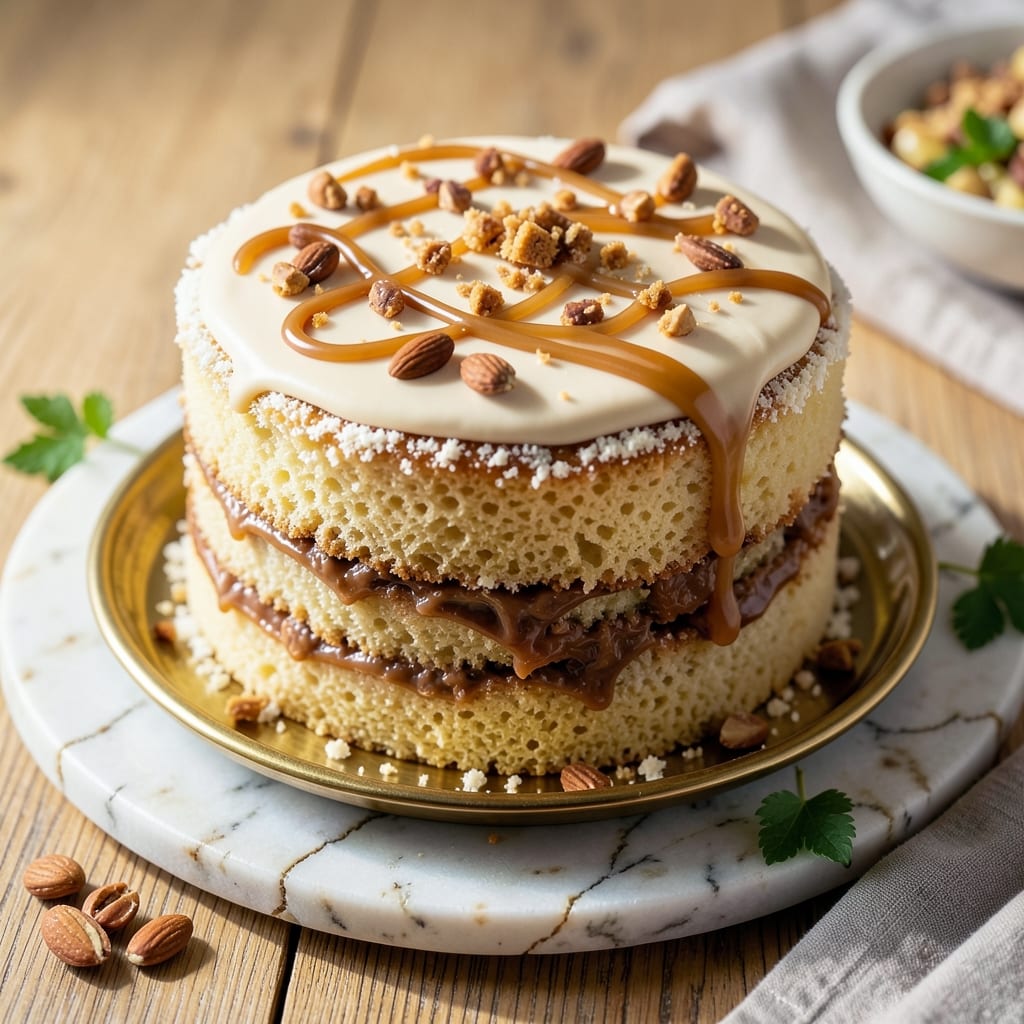
This almond praline cake delivers the perfect marriage of silky moisture and nutty crunch in every slice, creating a dessert that feels both indulgent and refined. 💛 The secret lies in a rich almond flour base that keeps the texture tender while toasted pralines add pockets of caramelized sweetness throughout. I developed this recipe after years of perfecting the balance between dense cake layers and fluffy frosting—no dry crumbs or overly sweet glaze here.
The foundation starts with a foolproof batter that combines almond flour with just enough butter and eggs to create a velvety crumb, while brown sugar and vanilla deepen the flavor profile. Homemade pralines (or store-bought) are folded into the batter for that signature crunch, and a light cream cheese frosting ties everything together with a smooth, tangy finish. Baking at 350°F for 40-50 minutes ensures even doneness without over-browning.
What you'll end up with is a professional-quality cake that's rich enough for special occasions but simple enough for weeknight treats. The almond flavor shines through without overpowering, while the praline pieces add texture that keeps every bite exciting. This recipe builds on classic Southern cake traditions but with a modern twist that feels fresh and approachable.
For variations, you can substitute regular flour for a lighter texture or use vegan butter and eggs for an inclusive option—just adjust baking times slightly. The frosting can also be swapped for a ganache or whipped cream to suit different preferences. Let's get to the mixing bowls!
Ingredients for almond praline cake
Almond flour, butter, and pralines—these three ingredients create the magic behind this cake's perfect texture.
| Ingredient | Amount | Notes |
|---|---|---|
| Almond Flour 🌰 | 2 cups | Finely ground, not blanched |
| Unsalted Butter 🧈 | 1 cup | Softened to room temperature |
| Large Eggs 🥚 | 4 whole | Room temperature for best mixing |
| Light Brown Sugar 🍯 | 1 ½ cups | Packed firmly for accuracy |
| Pure Vanilla Extract 🌿 | 2 tsp | High-quality, not imitation |
| Baking Powder 🧂 | 1 tsp | Diamond Crystal preferred |
| Salt 🧂 | ½ tsp | Fine sea salt preferred |
| Pralines 🍬 | 1 ½ cups | Homemade or store-bought, chopped |
| All-Purpose Flour 🌾 | ½ cup | For structure, optional variation |
| Cream Cheese 🧀 | 8 oz | Room temperature for frosting |
| Powdered Sugar 🍚 | 3 cups | Sifted for smooth frosting |
| Heavy Cream 🥛 | 1 cup | Cold for whipped frosting |
Almond flour is the heart of this cake—Bob's Red Mill or Anthony's Goods are my go-tos for the finest grind. The pralines? Homemade is ideal, but Trader Joe's or Gourmet Gift Baskets have great store-bought options. For the pralines, look for ones with a deep caramel color and crunch—those are the good ones. The butter should be unsalted so you control the saltiness, and room temperature for easy mixing. If you're using all-purpose flour for a variation, sift it first to avoid lumps in the batter.
No almond flour? Substitute with super-fine white flour—it won't be as moist, but it'll work in a pinch. For pralines, pecans or walnuts toasted with brown sugar and butter can mimic the crunch (though they won't be as sweet). The frosting can be swapped for a ganache made with cream cheese and chocolate chips if you want a richer flavor. If you don't have powdered sugar, sifted granulated sugar works, but it won't be as smooth. For the cream cheese frosting, whipping cream can replace heavy cream if you're in a bind—just chill the bowl first.
This cake keeps beautifully—3-4 days covered at room temperature or 1 week in the fridge. For extra freshness, store the frosting separately and add it just before serving. The cake freezes well too—3 months if wrapped tightly in plastic. I like to slice it the day before baking so the flavors meld even more. The pralines stay crisp if you store them in an airtight container at room temperature, but once mixed into the cake, they'll soften slightly—that's the magic.
Why You'll Love This Recipe
- No-Mixer Magic: I swear by this recipe—just cream butter and sugar, crack eggs, fold in almond flour. No stand mixer, no stress, just that perfect crumbly-yet-moist texture from the almond flour doing all the work.
- Praline-Perfect Crunch: That caramelized brown sugar? It’s the star. The praline bits melt into the cake while leaving little bursts of buttery crunch—like a hug from a Southern dessert, but way easier than pecan pie.
- Weeknight or Wow Factor: Same recipe, two vibes. Serve it warm with vanilla ice cream for a lazy Sunday, or slice it chilled for a birthday cake that’ll fool everyone into thinking you baked for hours.
- Leftovers That Last: Between us, this cake actually improves overnight. The flavors meld, the texture softens just enough, and you’ll find yourself sneaking slices for breakfast (no judgment). Plus, almond flour keeps it from drying out like regular cake.
Step-by-step instructions for almond praline cake
Let's bake this nutty, moist masterpiece with layers of texture and flavor.
👨🍳 Step 1: Mix the Cake Batter for Perfect Texture
Preheat your oven to 350°F and grease a 9-inch round cake pan (or line with parchment). In a large mixing bowl, combine the 2 cups almond flour, 0.5 cup all-purpose flour, 1 tsp baking powder, and 0.5 tsp salt. Whisk until evenly distributed—this dry mix forms the foundation of our tender crumb.
In a separate bowl, beat the 1 cup softened unsalted butter and 1.5 cups packed light brown sugar on medium speed until light and fluffy (3-4 minutes). Add the 4 room-temperature eggs one at a time, mixing well after each addition. Stir in the 2 tsp pure vanilla extract until fully incorporated. Here's the thing—room-temperature ingredients mix better and create a smoother batter.
Gradually add the dry ingredients to the wet mixture, mixing on low speed just until combined. Fold in the 1.5 cups chopped pralines by hand using a spatula—you want them evenly distributed but not crushed. The batter will be thick but workable. Pour into your prepared pan and smooth the top with a spatula.
🔥 Step 2: Bake Until Golden and Springy
Bake for 35-40 minutes until the top is golden brown and a toothpick inserted in the center comes out clean (or with a few moist crumbs). I know it seems like too long, but almond flour cakes need that extra time to fully set without drying out. The cake should spring back slightly when pressed gently in the center.
If the edges brown too quickly, tent the pan with aluminum foil after 20 minutes. This protects the cake while still allowing the center to bake through. The reason we wait until the top is golden is that almond flour cakes often look underdone when they're actually perfectly baked inside.
Let the cake cool in the pan for 10 minutes before transferring to a wire rack to cool completely. This gradual cooling prevents cracking and helps the cake set properly. Patience here ensures that slice will hold its shape when you serve it.
🥘 Step 3: Whip the Cream Cheese Frosting
While the cake cools, make the frosting by beating the 8 oz room-temperature cream cheese and 3 cups sifted powdered sugar together in a stand mixer fitted with the paddle attachment. Mix on medium speed until smooth and creamy (2-3 minutes). Add the 1 cup cold heavy cream and beat until soft peaks form.
Here's where it gets fun—taste the frosting and adjust the sweetness if needed. If it's too sweet, add a pinch more cream cheese. If it needs more flavor, add a splash of vanilla extract. The frosting should be thick enough to hold its shape but still spreadable. Real talk: this is the moment that matters for balancing the rich cake with a light, sweet finish.
Spread about half the frosting over the completely cooled cake layer. Then, gently press the 1.5 cups chopped pralines into the frosting, covering about half of them. Add the second layer of cake and cover completely with the remaining frosting. Press the remaining pralines into the top layer, leaving some for garnish. Chill for 30 minutes before slicing to let the frosting set.
⏰ Step 4: Final Touches and Serving
Once chilled, you can pipe additional frosting around the edges or decorate with extra pralines for that bakery-style finish. This cake keeps well in the refrigerator for up to 5 days, though I promise it won't last that long. The combination of moist almond flour base, sweet praline crunch, and creamy frosting makes every bite irresistible.
Slice with a warm knife for clean cuts, and serve at room temperature. The contrast between the tender cake, crunchy pralines, and smooth frosting is what makes this recipe special. Don't skip the chilling step—it ensures clean slices and prevents the frosting from melting too quickly.
Pro Tips For Making Almond Praline Cake
- Whisk Eggs Until Ribbon-Stage: DESCRIPTION: Don’t just beat the eggs—whisk them until they form a thick ribbon when you lift the whisk. I used to stop at "lightly beaten" and wondered why my cake was dense. This adds air that keeps the texture tender, especially with almond flour’s heaviness.
- Toast the Almond Flour: DESCRIPTION: Spread the almond flour on a baking sheet and toast it at 350°F (175°C) for 8–10 minutes until golden and nutty. Sounds weird, but it works: this step deepens the flavor and prevents a raw, chalky taste—no one wants a cake that tastes like almond paste.
- Cream Butter and Sugar Slowly: DESCRIPTION: Mix the butter and brown sugar on low speed first, then gradually increase to medium. I learned this the hard way—high speed just melts the butter too fast, and you end up with a greasy mess instead of a fluffy base. Patience here makes all the difference for that classic praline texture.
- Don’t Overmix After Adding Wet Ingredients: DESCRIPTION: Once you fold in the eggs and vanilla, stop mixing after 10–12 strokes. Overmixing develops gluten in the almond flour, turning your cake tough instead of light. I know, I know—it’s tempting to "get it all in there," but resist the urge.
Storing and reheating your leftovers
Room Temperature Storage
This cake stays fresh and delicious at room temperature for 3-4 days when stored in an airtight container like a clear plastic wrap-sealed cake carrier or a ceramic cake dome. I like to keep it in a cool, dry place away from direct sunlight to preserve the praline crunch. The frosting will soften slightly but remains stable enough for clean slicing. For extra protection, place a slice of bread on top of the cake—it absorbs moisture and keeps the layers moist. 💛
Refrigerator Preservation
If you're planning to serve the cake within 5-7 days, refrigeration is ideal. Wrap the cake tightly in plastic wrap followed by a layer of aluminum foil to prevent drying. Store it in the fridge at 38-40°F and let it sit at room temperature for 30-45 minutes before serving to restore the texture. The cold temperature helps maintain the praline crispness and prevents the almond flour from absorbing too much moisture.
Freezing for Later
For longer storage, freeze the cake for up to 3 months without losing its signature texture. Wrap each layer separately in plastic wrap and then in heavy-duty aluminum foil to create an airtight seal. Label with the date and store in a freezer-safe container or heavy-duty freezer bag. When ready to serve, thaw overnight in the fridge and bring to room temperature before slicing. The frosting may soften slightly after thawing, so you might need to re-chill it for 10-15 minutes before serving. ❄️
Reheating Slices
If you're reheating individual slices, the best method is to warm them in the oven. Preheat to 300°F and place slices on a baking sheet lined with parchment paper. Heat for 5-7 minutes until the frosting is slightly softened and the cake is warm through. For a quick fix, microwave slices on 50% power for 10-15 seconds—just enough to melt the frosting without drying out the cake. Avoid the microwave for more than one slice at a time to prevent uneven heating. 🔥
Frosting Refresh
If the frosting loses its shine or becomes slightly grainy after storage, you can easily revive it. Simply whisk in 1-2 tablespoons of heavy cream to restore its smooth texture. For a more dramatic refresh, spread a thin layer of fresh frosting over the top and sides to give it a bakery-fresh look. This works especially well if you've stored the cake for more than 3 days—it's a game-changer for presentation. 💡
Nutrition facts
Frequently asked questions
Can I make this cake without almond flour?
Yes, but the texture will change. Replace the 2 cups almond flour with 2 cups super-fine white flour for a lighter crumb, though it won't be as moist or nutty. For a gluten-free option, use a 1:1 almond flour blend with xanthan gum. The pralines will still add crunch, but the flavor profile shifts noticeably.
How do I prevent the cake from cracking?
Cracking usually happens from uneven cooling or overmixing. Let the cake cool in the pan for 10 minutes before transferring to a wire rack, and avoid opening the oven door too early. Also, mix the batter just until combined—overmixing develops gluten in the almond flour, making it tough. A water bath can help too for extra moisture.
What's the best way to chop pralines for even distribution?
Use a sharp chef's knife or food processor to chop pralines into ¼-inch pieces for balanced crunch. Avoid pulverizing them—they should remain intact but bite-sized. For extra texture, toast store-bought pralines in a 350°F oven for 5 minutes before chopping to enhance their caramelized flavor.
Can I make this cake in a different pan shape?
Yes, but adjust baking time accordingly. For a 9x13-inch pan, bake 30-35 minutes (cover with foil if browning too fast). For a 6-inch round pan, reduce to 25-30 minutes. The key is to bake until a toothpick comes out clean—almond flour cakes need slightly longer than traditional flour cakes. Always check at the lower end of the time range.
Why did my cake turn out dense instead of moist?
Dense texture usually means overbaking or insufficient fat. Check your oven temperature with an oven thermometer—many run hotter than set. Also, ensure your butter is softened but not melted, and don't overmix the batter. For extra moisture, brush the cooled cake layers with simple syrup before frosting.