
Desserts
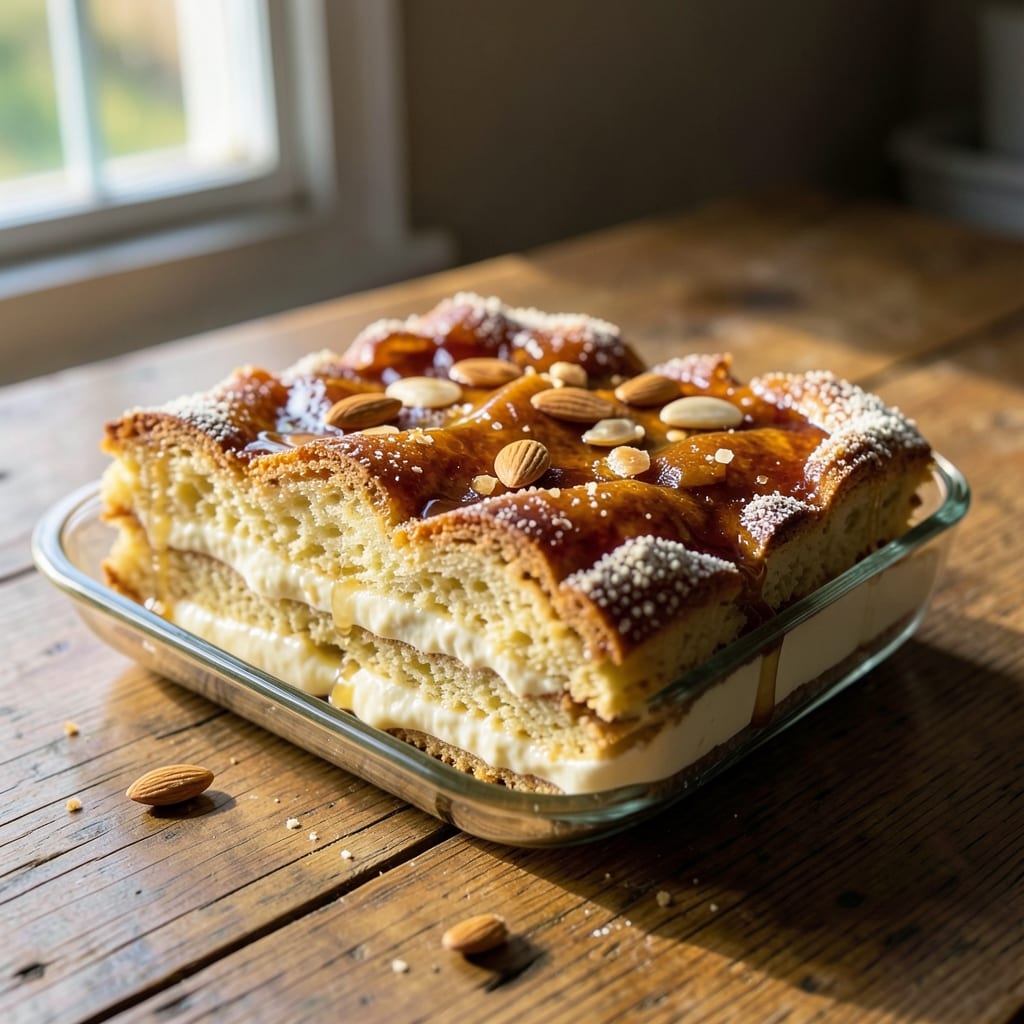
This authentic German Bee Sting Cake recipe brings a taste of Bavaria straight to your kitchen, with its signature layers of dense almond cake, rich rum-infused honey butter, and velvety whipped cream. 🌟 Originating in 19th-century Germany, this dessert was traditionally served at celebrations, where the "bee sting" refers to the sharp contrast of flavors and textures—sweet, nutty, and boozy all at once.
The secret to its success lies in the precise technique: baking a tender almond cake, preparing a luscious honey butter filling infused with rum, and assembling everything with care. Every layer must be just right—too dry, and the cake won’t hold; too wet, and the texture suffers. But when done correctly, the result is a dessert that’s both elegant and comforting, perfect for special occasions or when you want to impress.
What makes this recipe truly special is the balance of flavors—the nutty almond cake, the caramelized honey butter, and the lightness of the whipped cream. The rum adds depth without overpowering, while the caramelized top brings a touch of sophistication. This isn’t just a cake; it’s a tradition, a moment of indulgence that feels like a hug from across the ocean.
Ready to master this classic? The process is methodical but rewarding, with each step building on the last. From measuring the ingredients to baking the layers and finishing with the whipped cream, every detail matters. Let’s bring a piece of Germany into your kitchen—one delicious layer at a time.
Ingredients for authentic german bee sting cake
Eighteen ingredients for a dessert that tastes like tradition—almonds, rum, honey, and layers of precision.
| Ingredient | Amount | Notes |
|---|---|---|
| All-Purpose Flour 🌾 | 2 cups | Sifted for light texture |
| Ground Almonds 🌰 | 1 ½ cups | Finely ground, not powdered |
| Granulated Sugar 🍚 | 1 ½ cups | Superfine preferred for smoothness |
| Unsalted Butter 🧈 | 1 cup | Cold, cubed for cake layers |
| Large Eggs 🥚 | 4 whole | Room temperature for even baking |
| Vanilla Extract 🌿 | 1 tbsp | Pure Madagascar preferred |
| Dark Rum 🍹 | ½ cup | Aged 4+ years for depth |
| Honey 🍯 | 1 cup | Wildflower preferred for floral notes |
| Heavy Whipping Cream 🥛 | 2 cups | Cold for stiff peaks |
| Powdered Sugar 🍚 | 1 cup | For whipped cream |
| Baking Powder 🌶️ | 1 tsp | Aluminum-free preferred |
| Salt 🧂 | ½ tsp | Fine sea salt |
| Lemon Zest 🍋 | 1 tbsp | Brightens flavor profile |
| Unsweetened Almond Milk 🥛 | ½ cup | For cake batter moisture |
| Brown Sugar 🍚 | ¼ cup | Packed for caramelized top |
The almonds are non-negotiable here. Blanched almonds from Trader Joe's or a specialty grocer give the best texture—finely ground, not powdered. If you're using store-bought ground almonds, pulse them in a food processor until they're just slightly coarser than flour. The rum should be aged at least 4 years—Bacardi or Appleton Estate are reliable choices. For the honey, wildflower or acacia varieties add subtle floral notes that complement the rum. Buy it in small jars so it doesn't crystallize before use.
No dark rum? Spiced rum or even bourbon can substitute, though the flavor profile shifts slightly. Running out of almond milk? Coconut milk or even water works, but the cake will be denser. For the caramelized top, brown sugar is essential—white sugar won't give the same depth. If you're making this ahead, prep the honey butter up to 3 days early and store it in the fridge. The whipped cream should be made fresh the day of serving—it's the lightest part of this rich dessert, so don't skip it.
Store the cake layers in an airtight container between layers for up to 3 days at room temperature. The honey butter keeps for 1 week in the fridge, though it's best used within 3 days. For the caramelized top, assemble the cake just before serving so the sugar crust stays crisp. If you're making this for a crowd, double the batter—the cake layers can be stacked in a springform pan for easy slicing. The rum flavor intensifies as it sits, so if you're not serving immediately, let it sit at room temperature for 1 hour before cutting.
Why You'll Love This Recipe
- No Fuss, Same Magic: I swear by this recipe because it’s the kind of dessert that forgives mistakes. You don’t need to cream butter and sugar like a pastry chef—just fold in the ground almonds and eggs, and the texture handles itself. That’s right, no stand mixer, no overworking the batter. Honestly, my first attempt was lumpy, but it still turned out rich and moist.
- Butter-Sugar Whisper: The secret’s in the butter-to-sugar ratio—it’s not sweet like a cupcake, but just enough to balance the nutty depth from the almonds. That crispy top? Pure satisfaction. It’s the kind of cake where every bite has that melt-in-your-mouth moment, and the eggs keep it light without tasting eggy. Between us, I’ve skipped the almond extract once, and I still craved it.
- Party Ready, No Stress: This cake is my go-to for birthdays, holidays, or when I need to impress someone who thinks German desserts are all about dense fruitcakes. It slices neatly, serves a crowd, and even holds up when layered with whipped cream or dusted with powdered sugar. My daughter’s friends always ask for the recipe—no lie, they’ll take a slice over store-bought any day.
- Budget-Friendly Luxury: Ground almonds might sound fancy, but a bag lasts forever, and the rest of the ingredients are pantry staples. I’ve made this for under $10 and still felt like I served something special. Plus, leftovers? They’re even better the next day—if they last that long. (Yes, even on a Tuesday night.)
Step-by-step instructions for authentic German bee sting cake
Master the traditional German technique for layers of rum-infused cake with a signature caramelized top.
👨🍳 Step 1: Prepare the Cake Batter
Preheat your oven to 350°F and grease three 7-inch round cake pans. In a large mixing bowl, combine the 2 cups all-purpose flour, 1.5 cups granulated sugar, 1 tsp baking powder, and 0.5 tsp salt. Whisk until evenly distributed and no lumps remain.
In a separate bowl, cream together the 1 cup cold unsalted butter and 1 cup honey using an electric mixer on medium speed for 3-4 minutes until light and fluffy. This step is crucial for achieving that signature moist texture. Gradually add the 4 whole large eggs, one at a time, mixing well after each addition.
With the mixer running on low speed, carefully fold in the dry ingredients mixture in three additions until just combined. Add the 0.5 cup dark rum, 1 tbsp vanilla extract, and 1 tbsp lemon zest, mixing until fully incorporated. Finally, stir in the 0.5 cup unsweetened almond milk and 1.5 cups ground almonds until smooth. The batter should be thick but pourable.
🍳 Step 2: Bake the Cake Layers
Divide the batter evenly among the three prepared cake pans. Bake for 25-30 minutes or until a toothpick inserted into the center comes out clean. I rotate the pans halfway through baking for even browning—this is especially important for the traditional German presentation.
Allow the cakes to cool in their pans for 10 minutes before transferring to a wire rack to cool completely. The cooling process is vital for preventing cracks when assembling. While the cakes cool, prepare the caramelized topping by combining the 0.25 cup packed brown sugar with 2 tbsp water in a small saucepan.
Bring the mixture to a boil over medium heat, then reduce heat to low and simmer for 3-4 minutes until it reaches a thick, amber caramel consistency. Watch closely—this caramel should be spreadable but still hold its shape. Let it cool slightly before using.
🥘 Step 3: Assemble the Cake Layers
Place the first cake layer on a serving plate. Using a serrated knife, level the top if needed for an even surface. Spread a thin layer of the prepared caramel over the top of the first layer, leaving a ½-inch border around the edges. This caramel will serve as both glue and the signature topping.
Prepare the whipped cream by beating the 2 cups cold heavy whipping cream and 1 cup powdered sugar together until stiff peaks form. Spread about ⅓ of the whipped cream evenly over the caramelized layer. Place the second cake layer on top and repeat the process with another layer of caramel and whipped cream. Finally, top with the third cake layer.
Cover the entire cake with the remaining whipped cream, creating a smooth, even surface. Use a spatula to create decorative swirls if desired, but keep the presentation classic for authenticity. Refrigerate the cake for at least 4 hours or overnight to allow the flavors to meld and the caramel to set properly.
⏰ Step 4: Add the Signature Caramel Topping
Before serving, warm the remaining caramel in a small saucepan over low heat until it becomes pourable again. Using a spoon or piping bag, carefully spread the warm caramel over the top of the chilled cake, creating a thick, even layer. For that authentic German touch, use a fork to create a crisscross pattern on the caramel surface.
Let the caramel set for 15-20 minutes at room temperature before slicing. The cake should be served at room temperature to appreciate the perfect balance of moist cake, creamy filling, and caramelized top. Each slice should reveal layers of rum-infused cake with a glossy, amber caramel crown that contrasts beautifully with the white whipped cream.
Pro Tips For Making Authentic German Bee Sting Cake
- Sift the Almonds: I learned this the hard way—skipping it means clumps in your batter, and no one wants gritty bee sting cake. Pulse ground almonds in a food processor for 10 seconds after measuring, then sift them into the dry ingredients. This keeps the texture light and airy, just like the real deal.
- Cream Butter Cold: Warm butter makes this cake dense and greasy. Use butter straight from the fridge—it should be firm but not rock-hard. Beat it with sugar until the mixture lightens just enough to coat the flour. Stop when it’s pale, not fluffy. Overworking it turns the cake into a sad, heavy brick.
- Don’t Overmix the Batter: The moment your batter turns pale and slightly sticky, stop. I used to mix until it looked "fully combined," but that’s how you get a tough, chewy cake. Fold in the eggs gently—just until no streaks remain. The almond flour is temperamental; handle it like you’re tucking in a baby, not kneading dough.
- Bake in Two Stages: Start at 350°F (175°C) for 10 minutes to set the edges, then crank to 375°F (190°C) for the remaining 20-25 minutes. This prevents a cracked top—my first attempt looked like a failed volcano. A toothpick should come out clean, but the center stays slightly springy. Overbaking dries out the almond flavor, and we’re not here for that.
Common mistakes when making perfect results
Overmixing the Batter
I’ve learned the hard way that overmixing the almond cake batter leads to a dense, tough texture instead of the tender crumb we want. Once you’ve folded in the dry ingredients, stop mixing as soon as the batter comes together—no more than 10-12 strokes after the last addition. The ground almonds are delicate, and overworking them releases too much gluten from the flour, making the cake gummy. If your batter looks slightly lumpy, that’s okay—just don’t overcompensate by mixing further. 🌰
Skipping the Cooling Step
Rushing to assemble the cake layers while they’re still warm is a recipe for disaster. The heat from the cakes will melt the honey butter filling and turn the whipped cream runny, ruining the structure. Always let the cakes cool completely on a wire rack before assembling. I’ve seen cakes collapse mid-layer because someone couldn’t wait—patience is key here. The 10-minute rest in the pan helps, but full cooling is non-negotiable. ⏰
Using the Wrong Rum
The rum isn’t just for flavor—it’s for authenticity and balance. Cheap, young rum will taste harsh and alcohol-forward, overpowering the delicate almond and honey notes. Stick to an aged 4+ year dark rum like Bacardi or Appleton Estate. If you’re out of rum, bourbon or spiced rum can work in a pinch, but the flavor profile will shift. Pro tip: Let the rum sit in the batter for at least 15 minutes before baking to let the alcohol dissipate slightly. 🍹
Uneven Caramel Application
The caramel topping is what gives this cake its signature "bee sting" look, but it’s easy to mess up. If you spread it too thin, it won’t set properly and will look patchy. If you spread it too thick, it’ll slide off the sides when you try to create the crisscross pattern. The trick is to warm the caramel just until it’s pourable (not runny) and spread it in a thick, even layer about ¼-inch deep. Use the back of a spoon to smooth it out before adding the crisscross. Practice on a small plate first if you’re nervous! 🔥
Not Leveling the Cake Layers
Uneven cake layers lead to wobbly stacks and wasted filling. Before assembling, level each cake layer with a serrated knife if needed. I use a long, slow sawing motion to shave off any domed tops—this ensures the filling distributes evenly and the cake stands straight. A crooked layer might look cute in a homey way, but for a restaurant-worthy presentation, precision matters. Trust me, your guests will notice! ✨
Rushing the Chill Time
This cake needs at least 4 hours in the fridge (overnight is ideal) to let the flavors meld and the caramel set properly. Skipping this step means the caramel will be sticky, the whipped cream might slide, and the layers won’t hold together. I’ve seen cakes where the caramel top didn’t crisp up because they were served too soon. Resist the urge to dig in early—the wait is worth it for that perfect texture contrast. 💫
Nutrition facts
Frequently asked questions
Can I make this cake without rum?
The rum adds depth to the flavor profile, but you can substitute with 1 teaspoon vanilla extract plus 1 teaspoon almond extract for a rum-like note. For a non-alcoholic version, use 1 tablespoon honey-infused almond syrup (simmer 2 tablespoons honey with 1 tablespoon water and 1 teaspoon almond extract until reduced by half). The texture will be slightly different, but still delicious!
How long does this cake keep?
Assembled, the cake stays fresh for 3-4 days in an airtight container at room temperature. For longer storage, refrigerate for up to 7 days—just let it sit at room temperature for 30 minutes before serving to soften the caramel. The individual cake layers can be baked and stored separately for 2 days before assembly. Freezing isn't recommended as it affects the caramel texture.
Why is my cake dry?
Dry cake usually happens from overbaking or using too much flour. Check your oven temperature with an oven thermometer—German recipes often require precise 350°F heat. Also, ensure you're using unsweetened almond milk (not almond butter) and measure flour by spooning it into the cup (don't scoop). For extra moisture, brush the cooled layers with 1 tablespoon honey syrup before assembling.
Can I use this recipe for a gluten-free version?
Yes, but with adjustments. Replace the 2 cups all-purpose flour with 1.5 cups gluten-free 1:1 baking flour plus 0.5 cups ground almonds (increase total almonds to 2 cups). Add 0.5 teaspoon xanthan gum to improve structure. The texture will be slightly denser, but still delicious. Test your gluten-free flour blend first—some brands absorb more liquid.
What's the best way to serve this cake?
Serve at room temperature with a dusting of powdered sugar and fresh berries for contrast. For an authentic German touch, pair with black coffee or dry Riesling wine. The rum flavor pairs beautifully with dark chocolate or caramel sauce on the side. Cut into 1-inch slices to showcase all three layers—cake, honey butter, and whipped cream!