
Desserts
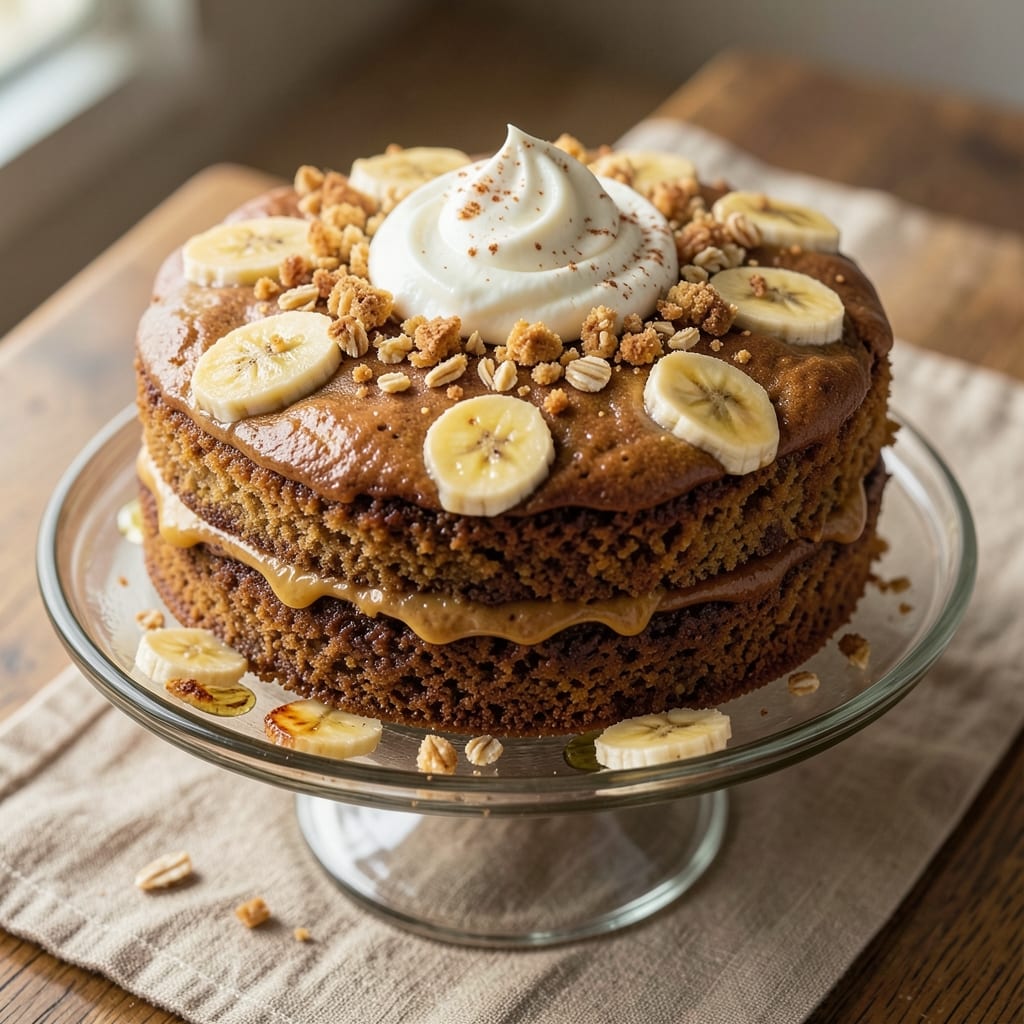
This banana cake recipe with oat flour delivers the perfect balance of gluten-free tenderness and nutty crunch—no one will guess it’s made without traditional flour. 💛 The secret lies in oat flour’s natural binding properties, which create a moist, cake-like texture while adding subtle earthy notes that complement the banana’s sweetness. What makes this recipe stand out is its simplicity: just six core ingredients, minimal mixing, and a baking time of under an hour.
The beauty of oat flour lies in its versatility—it’s naturally gluten-free, packed with fiber, and adds a satisfying texture that traditional flours can’t match. Unlike dense gluten-free cakes, this one rises beautifully and stays wonderfully moist for days. The recipe also allows for easy customization: fold in chocolate chips for decadence or chopped walnuts for extra crunch, all while keeping the gluten-free integrity intact.
By the time you pull this cake from the oven, you’ll have a golden-domed loaf with a tender crumb and just the right amount of nutty depth from the oat flour. The banana flavor shines through without being overpowering, making it a crowd-pleaser for both dessert lovers and those with dietary restrictions. Top it with a dusting of powdered sugar or a simple cream cheese frosting for the perfect finishing touch.
This recipe isn’t just about gluten-free baking—it’s about proving that healthier ingredients can deliver restaurant-quality results. Whether you’re baking for a celebration or a weeknight treat, the moist texture and nutty crunch will leave everyone asking for seconds. Let’s get baking!
Ingredients for banana cake recipe with oat flour
Six core ingredients transform into a gluten-free banana cake with nutty crunch and restaurant-quality moisture.
| Ingredient | Amount | Notes |
|---|---|---|
| Ripe Bananas 🍌 | 1 ½ cups | Mashed to no lumps |
| Oat Flour 🌾 | 2 cups | Blended from rolled oats |
| Granulated Sugar 🍚 | 1 cup | Or coconut sugar |
| Extra-Virgin Olive Oil 🫒 | ½ cup | For moisture and richness |
| Large Eggs 🥚 | 2 whole | Room temperature preferred |
| Baking Powder 🧂 | 2 tsp | Diamond Crystal preferred |
| Ground Cinnamon 🌿 | 1 tsp | For warm depth |
| Vanilla Extract 💧 | 1 tsp | Pure vanilla preferred |
| Salt 🧂 | ½ tsp | Fine sea salt |
| Powdered Sugar 🍚 | ¼ cup | For dusting |
| Chopped Walnuts 🌰 | ½ cup | Optional for crunch |
Oat flour is the star here—Bob's Red Mill or Anthony's Goods are my go-to brands for consistent quality. The key is grinding your own from rolled oats if possible; pre-made oat flour loses freshness quickly. Look for rolled oats labeled 'old-fashioned' or 'steel-cut'—these yield the finest flour. The bananas should be very ripe (black spots, soft to touch) for maximum sweetness and moisture. If you can't find ripe bananas, overripe ones from the grocery store's discount bin work perfectly.
No vanilla extract? Vanilla bean paste adds depth, or a pinch of vanilla powder in a pinch. The walnuts are optional but recommended—they add that satisfying crunch while balancing the cake's tenderness. Substituting sugar? Coconut sugar works 1:1, but maple syrup requires reducing first. For a richer texture, replace half the olive oil with melted coconut oil. The baking powder is non-negotiable—Diamond Crystal is twice as potent as other brands, so don't double it. If you're sensitive to gluten, ensure your oats are certified gluten-free.
This cake keeps beautifully—3-4 days at room temperature covered, or 1 week refrigerated. For longer storage, slice and freeze portions between parchment paper for up to 3 months. The walnuts can be toasted before adding for extra flavor. For serving, dust with powdered sugar or drizzle with melted dark chocolate. Leftovers reheat well in the microwave for 10 seconds to restore freshness.
Why You'll Love This Recipe
- No Muffin Tin Needed: I swear by this—just one bowl, a whisk, and a pan. The oat flour keeps it dense enough to hold shape without crumbling, and those ripe bananas mash into the batter so smoothly, you’ll wonder why you ever used a mixer.
- Moist Without Grease: The olive oil adds richness without heaviness, while the oat flour soaks up the banana’s natural sweetness instead of drying out. It’s the kind of cake that stays tender for days, not the kind that turns into a brick by Wednesday.
- Breakfast or Dessert: Honestly, I’ve served this cold for brunch with yogurt and warm with a drizzle of honey. The eggs bind it just enough to hold together when sliced, so it’s perfect for grab-and-go mornings or a spontaneous snack attack.
- Pantry Magic: Between us, this recipe uses ingredients you probably already have. No specialty flours, no weird substitutions—just bananas going bad, a bag of oats, and sugar from the jar. Even the olive oil stretches further than butter would.
Step-by-step instructions for banana cake with oat flour
This method delivers a perfectly moist, gluten-free banana cake with nutty depth and tender crumb.
👨🍳 Step 1: Prepare the Banana-Oil Mixture
In a medium bowl, mash the 1.5 cups ripe bananas until completely smooth with no visible lumps. I like to use a fork first to break them up, then press through a fine-mesh sieve if needed—this ensures a silky texture in the final cake. Add the 0.5 cup extra-virgin olive oil and whisk vigorously for 1 minute until fully emulsified. The oil helps create that signature moistness while adding subtle richness that pairs beautifully with the oat flour.
This is where the magic happens—the olive oil not only tenderizes the cake but also creates a fine crumb structure that gluten-free baking often struggles to achieve. Don't rush this step; proper emulsification prevents dense pockets in your finished cake.
👨🍳 Step 2: Combine Wet and Dry Ingredients
In a separate large bowl, whisk together the 2 cups oat flour, 1 cup granulated sugar, 2 tsp baking powder, 1 tsp ground cinnamon, 0.5 tsp salt, and 1 tsp vanilla extract. The oat flour should be sifted first to prevent any clumping—this is especially important for gluten-free baking where proper aeration matters. Make a well in the center and pour in the banana-oil mixture along with the 2 whole large eggs.
Using a rubber spatula, gently fold the wet ingredients into the dry until just combined—you should still see small flour streaks. Overmixing develops gluten-like proteins in the oat flour, which can make the cake dense. Fold in the 0.5 cup chopped walnuts at this stage so they're evenly distributed throughout the batter.
🔥 Step 3: Bake Until Golden and Springy
Preheat your oven to 350°F and grease an 8-inch round cake pan or line it with parchment paper. Pour the batter into the prepared pan and smooth the top with a spatula. Bake for 35-40 minutes until a toothpick inserted in the center comes out clean and the edges are golden brown. I find the oat flour absorbs moisture differently than wheat flour, so it's crucial to watch for these visual cues rather than relying solely on time.
The cake should pull away slightly from the edges of the pan and have a springy texture when pressed gently in the center. If the top browns too quickly, tent loosely with aluminum foil after 20 minutes to prevent over-browning while maintaining even cooking.
⏰ Step 4: Cool and Dust with Powdered Sugar
Remove the cake from the oven and let it cool in the pan for 10 minutes, then transfer to a wire rack to cool completely. This gradual cooling prevents cracking, which is particularly important with gluten-free batters that lack natural elasticity. Once fully cooled, dust the top generously with the 0.25 cup powdered sugar using a fine-mesh sieve for an elegant finish.
The cake will be moist but not wet—thanks to the olive oil and proper baking time. Slice with a serrated knife for clean pieces, and serve at room temperature. The walnuts add delightful crunch while the oat flour provides a subtle nutty flavor that complements the banana's sweetness perfectly.
Pro Tips For Making Banana Cake Recipe With Oat Flour
- Mash Bananas Thoroughly: You’re not making banana smoothie—press those spots with a fork until the mix looks like wet sand. I learned this the hard way when my cake turned out dense and chewy because I skimped on the mashing.
- Bake at 325°F, Not Hotter: Oat flour burns faster than wheat flour, and olive oil adds extra heat sensitivity. A 325°F oven keeps the cake tender inside without a dry crust—trust me, I’ve seen the charred evidence.
- Don’t Overmix the Batter: Stir just until the oat flour disappears, or you’ll develop gluten and end up with a tough, dense loaf. Two or three gentle swirls with a spatula is all it takes—no need to go full speed.
- Use Cold Eggs for Moisture: Room-temperature eggs work, but cold ones add a subtle richness that balances the sweetness. Crack them into a bowl first, then whisk—this prevents splatter and keeps the cake’s texture light.
Regional styles of this recipe
Scandinavian Oat Crunch
In Sweden and Norway, oat flour is a baking staple, and this cake takes inspiration from their traditional Västerbotten cake—a dense, nutty treat often served with coffee. The key difference? I replace the traditional rye flour with 100% oat flour for a lighter texture while keeping the same warm spices. Swap the walnuts for cardamom-infused almonds (toast 0.5 cup sliced almonds with ½ tsp ground cardamom and 1 tbsp brown sugar before folding into batter) for that Nordic twist. Serve with lingonberry compote for a tart contrast. 🌾
Southern U.S. Banana Pudding Fusion
The American South loves its banana pudding, so why not blend it with oat flour? This variation keeps the classic layers but uses a moist oat flour cake base instead of traditional pound cake. Make two batches of the cake, layer with vanilla pudding (made with 2 tbsp cornstarch thickened milk), and top with shortbread cookie crumbles (pulse 1 cup gluten-free shortbread cookies in a food processor). The oat flour adds a subtle nutty depth that pairs perfectly with the creamy pudding. 🍌
Japanese Matcha Twist
For a modern take, incorporate matcha powder—a Japanese favorite that adds earthy complexity. Replace 1 tbsp of the oat flour with 1 tbsp ceremonial-grade matcha and fold in 2 tbsp white chocolate chips for a subtle bitterness-sweetness balance. Dust the cooled cake with matcha powder instead of powdered sugar for an elegant finish. Serve with green tea ice cream for a harmonious flavor pairing. 🍵
Mexican Spiced Version
Give your banana cake a fiesta flair by adding Mexican cinnamon (canela) and a hint of orange zest. Replace the ground cinnamon with 1 tsp Mexican cinnamon and add 1 tbsp fresh orange zest to the batter. Fold in chopped pecans instead of walnuts for a Southern Mexican touch. Top with a drizzle of Mexican chocolate ganache (melt 4 oz Mexican chocolate with 2 tbsp heavy cream) for extra decadence. 🌶️
German Apfelkuchen Style
Transform this into a German apple-oat cake by folding in diced tart apples (like Granny Smith) along with the walnuts. Use 1 tsp apple pie spice (cinnamon + nutmeg + allspice) instead of plain cinnamon, and top the batter with a lattice of thin oat flour strips before baking. Serve warm with vanilla whipped cream for a cozy dessert that feels like a slice of home. 🍏
Nutrition facts
Frequently asked questions
Why does this banana cake use oat flour instead of regular flour?
Oat flour creates a naturally gluten-free, moist texture with subtle nutty depth that regular flour can't match. It's also packed with fiber and protein, making this cake more nutritious while maintaining that classic banana cake flavor. The oat flour's natural binding properties help prevent dryness, which is common in gluten-free baking.
Can I make this cake without eggs?
Yes! For a vegan version, replace the 2 eggs with 2 tbsp ground flaxseed mixed with 6 tbsp water (let it sit for 5 minutes to thicken). Alternatively, use ½ cup unsweetened applesauce or ½ cup mashed avocado for moisture. The cake may be slightly denser but will still be delicious.
How do I know when the cake is fully baked?
Look for three key signs: a toothpick inserted in the center should come out clean, the edges should pull away slightly from the pan, and the top should be golden brown. Since oat flour absorbs moisture differently, baking times can vary—start checking after 30 minutes rather than relying solely on the recipe's time.
What's the best way to store leftovers?
Wrap the cake tightly in plastic wrap or store in an airtight container at room temperature for 3-4 days. For longer storage, slice and freeze portions between parchment paper for up to 3 months. To restore freshness, microwave slices for 10-15 seconds before serving.
Can I add chocolate chips or nuts to this recipe?
Fold in ½ cup chocolate chips or ½ cup chopped walnuts (or both) when combining wet and dry ingredients. For extra flavor, toast nuts at 350°F for 5-7 minutes before adding. Just be sure not to overmix once they're in the batter to maintain that tender crumb.